The difference between CTO and CIO becomes clear when you look at how modern companies use technology to grow and manage operations. Imagine a growing e-commerce company. One leader is focused on creating innovative apps, improving digital products, and adopting the latest technologies to stay ahead of competitors. Another leader focuses on managing the company’s internal systems, data security, and technology infrastructure so employees can work smoothly.
This real-world situation explains the difference between CTO and CIO. The Chief Technology Officer (CTO) mainly focuses on building and improving products through technology. The Chief Information Officer (CIO) focuses on managing internal IT systems and ensuring technology supports business operations.
Understanding the difference between CTO and CIO helps businesses assign the right leadership roles. Many people confuse these positions because both involve technology leadership. However, the difference between CTO and CIO lies in their strategic goals, responsibilities, and focus areas within an organization.
Key Difference Between the Both
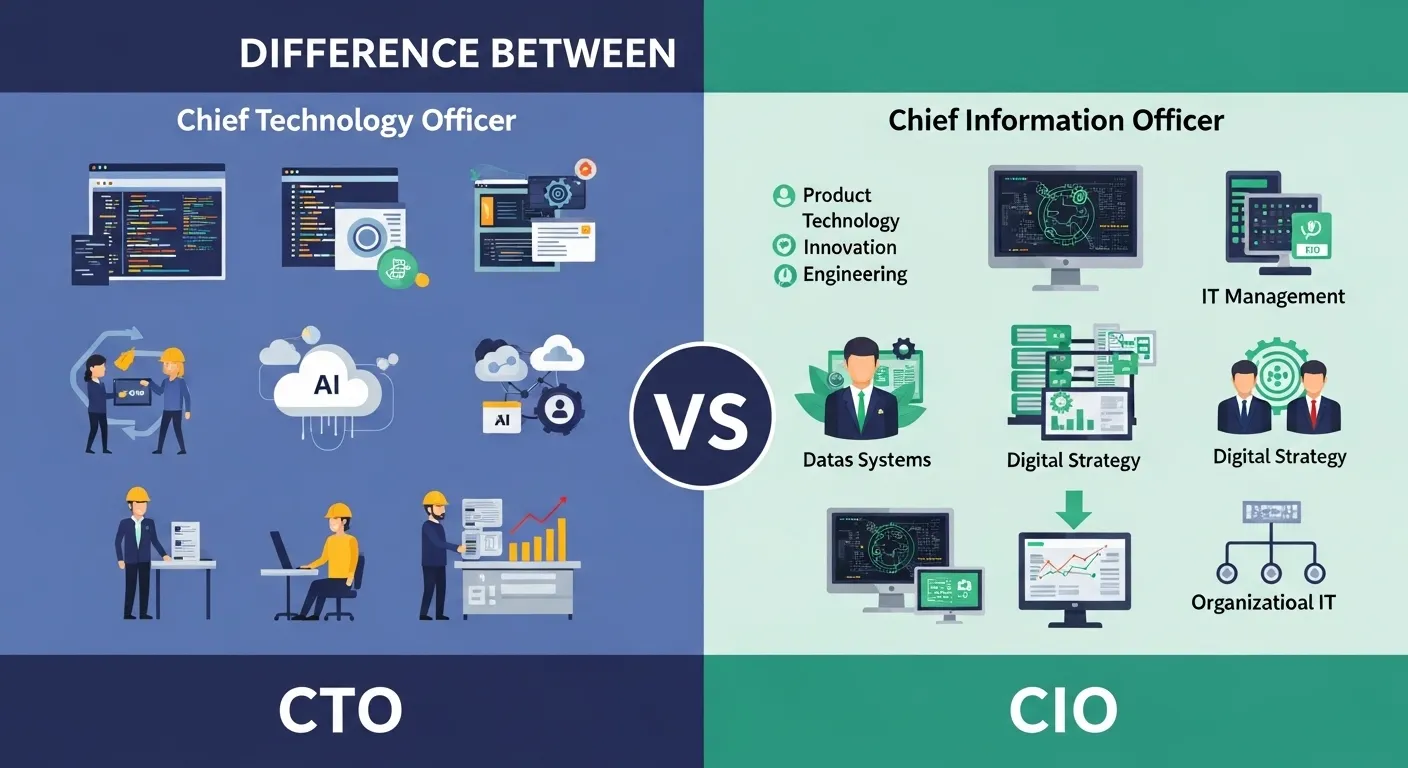
The difference between CTO and CIO mainly lies in their focus.
- A CTO (Chief Technology Officer) focuses on external technology innovation and product development.
- A CIO (Chief Information Officer) focuses on internal IT management and business processes.
Why Their Difference Is Necessary to Know for Learners and Experts
Understanding the difference between CTO and CIO is important for students, professionals, and organizations. These roles shape how companies use technology to compete in the market.
For learners, knowing this difference helps them choose career paths in technology leadership. Someone interested in innovation and product development may aim for a CTO role, while someone passionate about managing information systems may pursue the CIO path.
For experts and businesses, the distinction ensures better decision-making. A company with a clear separation between these roles can innovate while maintaining stable internal systems.
In society, these positions help organizations improve digital services, data management, cybersecurity, and technological innovation.
Pronunciation of the Both
CTO (Chief Technology Officer)
- US pronunciation: /ˌsiː tiː ˈoʊ/
- UK pronunciation: /ˌsiː tiː ˈəʊ/
CIO (Chief Information Officer)
- US pronunciation: /ˌsiː aɪ ˈoʊ/
- UK pronunciation: /ˌsiː aɪ ˈəʊ/
Linking Hook
Although both roles belong to the executive technology team, their responsibilities and strategic goals differ greatly. Let us explore the difference between CTO and CIO in detail.
Difference Between CTO and CIO
1. Primary Focus
CTO: Focuses on technological innovation and product development.
Example 1: A software company’s CTO leads the creation of a new mobile application.
Example 2: The CTO introduces artificial intelligence features into a product.
CIO: Focuses on internal IT systems and business processes.
Example 1: The CIO manages company databases and enterprise systems.
Example 2: The CIO improves internal communication software used by employees.
2. Strategic Goal
CTO: Builds technology that improves products and services.
Example 1: A CTO develops new cloud-based tools for customers.
Example 2: A CTO invests in research to create innovative software.
CIO: Uses technology to improve operational efficiency.
Example 1: A CIO upgrades internal ERP systems.
Example 2: A CIO implements data management systems for employees.
3. Audience or Users
CTO: Serves customers and external users.
Example 1: The CTO develops a better customer app.
Example 2: The CTO improves website performance for users.
CIO: Serves employees and internal teams.
Example 1: The CIO introduces new internal communication platforms.
Example 2: The CIO ensures employees have secure access to company systems.
4. Technology Implementation
CTO: Focuses on product technology.
Example 1: Designing new software architecture.
Example 2: Developing innovative digital platforms.
CIO: Focuses on infrastructure technology.
Example 1: Managing company networks.
Example 2: Maintaining internal servers and databases.
5. Innovation Role
CTO: Drives innovation and technological trends.
Example 1: Introducing AI in a product.
Example 2: Using blockchain in financial services.
CIO: Maintains reliable IT operations.
Example 1: Ensuring system uptime.
Example 2: Maintaining secure data systems.
6. Department Leadership
CTO: Leads engineering or product development teams.
Example 1: Software engineers report to the CTO.
Example 2: Product developers collaborate with the CTO.
CIO: Leads IT operations teams.
Example 1: Network administrators report to the CIO.
Example 2: IT support teams work under the CIO.
7. Technology Investment
CTO: Invests in new technologies for products.
Example 1: Research in machine learning.
Example 2: Developing advanced mobile platforms.
CIO: Invests in systems that improve company productivity.
Example 1: Purchasing cybersecurity tools.
Example 2: Upgrading enterprise software.
8. Business Impact
CTO: Impacts market competitiveness.
Example 1: Launching innovative digital products.
Example 2: Creating unique customer experiences.
CIO: Impacts operational efficiency.
Example 1: Improving workflow automation.
Example 2: Reducing system downtime.
9. Work Approach
CTO: Future-oriented and experimental.
Example 1: Testing emerging technologies.
Example 2: Exploring new software frameworks.
CIO: Stability-oriented and structured.
Example 1: Maintaining reliable IT infrastructure.
Example 2: Ensuring compliance and security.
10. Relationship with Business Strategy
CTO: Aligns technology innovation with product strategy.
Example 1: Developing technology for a digital platform.
Example 2: Enhancing customer digital experiences.
CIO: Aligns IT systems with business operations.
Example 1: Integrating finance software systems.
Example 2: Supporting company communication networks.
Nature and Behaviour of Both
CTO:
- Innovative
- Risk-taking
- Future-focused
- Creative in technology development
CIO:
- Organized
- Strategic
- System-focused
- Risk-management oriented
Why People Are Confused About Their Use
People often confuse these roles because both involve technology leadership. In smaller companies, one person may perform both responsibilities. The titles also sound similar and belong to executive leadership teams. However, the difference between CTO and CIO lies in their focus: product innovation versus internal technology management.
Table Showing Difference and Similarity
| Feature | CTO | CIO | Similarity |
| Main Role | Technology innovation | IT management | Both are technology leaders |
| Focus | External products | Internal systems | Both support business growth |
| Team | Engineering teams | IT operations teams | Both lead technical departments |
| Goal | Competitive technology | Efficient operations | Both align tech with strategy |
| Impact | Product development | Business processes | Both improve company performance |
Which Is Better in What Situation?
CTO:
A CTO is better in organizations that depend heavily on technology innovation. Tech startups, software companies, and digital platforms require strong CTO leadership. The CTO helps build innovative products, adopt emerging technologies, and compete in fast-changing markets.
CIO:
A CIO is better in large organizations that rely on stable internal systems. Enterprises, banks, universities, and government institutions require strong IT management. The CIO ensures data security, system reliability, and efficient technology operations.
Use in Metaphors and Similes
CTO
Metaphor: “The CTO is the architect of a company’s technological future.”
Simile: “A CTO works like a scientist experimenting with new ideas.”
CIO
Metaphor: “The CIO is the backbone of a company’s information system.”
Simile: “A CIO manages systems like a conductor leading an orchestra.”
Connotative Meaning
CTO – Positive Connotation
Innovation, creativity, technological leadership.
Example: “The CTO brought groundbreaking innovation to the company.”
CIO – Neutral to Positive Connotation
Stability, organization, information control.
Example: “The CIO ensured the company’s systems remained secure.”
Idioms or Proverbs Related to the Roles
- “Think outside the box.”
Example: The CTO encourages engineers to think outside the box when designing new products. - “Keep the wheels turning.”
Example: The CIO works hard to keep the company’s IT systems running smoothly. - “A stitch in time saves nine.”
Example: The CIO upgrades security early because a stitch in time saves nine.
Works in Literature
(Technology leadership topics rather than direct titles)
- The Phoenix Project – Business novel, Gene Kim, 2013
- The Innovator’s Dilemma – Business/technology, Clayton Christensen, 1997
- The Lean Startup – Entrepreneurship, Eric Ries, 2011
Movies Related to Technology Leadership
- The Social Network – 2010, USA
- Steve Jobs – 2015, USA
- Pirates of Silicon Valley – 1999, USA
Frequently Asked Questions
1. What is the main difference between CTO and CIO?
The CTO focuses on technology innovation and products, while the CIO manages internal IT systems and information infrastructure.
2. Can one person be both CTO and CIO?
Yes, in small companies a single executive may handle both responsibilities.
3. Which role is more strategic?
Both are strategic, but the CTO focuses on technology innovation while the CIO focuses on operational efficiency.
4. Do CTO and CIO work together?
Yes, they collaborate to ensure technology supports both products and internal operations.
5. Which role is common in startups?
Startups often prioritize a CTO because product technology is essential for growth.
How Both Are Useful for Surroundings
Both CTOs and CIOs contribute to technological progress in society. CTOs create innovative technologies that improve digital services and products. CIOs maintain secure information systems that help organizations operate efficiently. Together, they support digital transformation in businesses and communities.
Final Words for Both
The CTO drives innovation and future technologies, while the CIO ensures stability and efficiency in information systems. Both roles are essential for successful technology leadership.
Conclusion
The difference between CTO and CIO lies mainly in their focus and responsibilities. A CTO concentrates on developing new technologies and products that help companies compete in the market. A CIO, on the other hand, ensures that internal IT systems run smoothly and support daily business operations.
Although their roles are different, both positions work together to build a strong technological foundation for organizations. Understanding the difference between CTO and CIO helps students choose career paths and helps companies design effective leadership structures. In a technology-driven world, both roles are essential for innovation, efficiency, and long-term business success.

I am a professional SEO content writer specialising in comparison-based and grammar-focused articles. Through my website GrammarCompare.com, I help readers clearly understand the difference between confusing terms with well-researched, easy-to-read content. My expertise lies in focusing on clarity, accuracy, and practical explanations that improve both knowledge and writing skills.