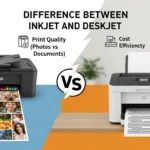
A few years ago, a small business owner walked into a store looking for a printer. The salesperson asked, “Do you want an inkjet or a deskjet?” Confused, the buyer thought they were two completely different technologies. This real-world confusion highlights the importance of understanding the difference between inkjet and deskjet.
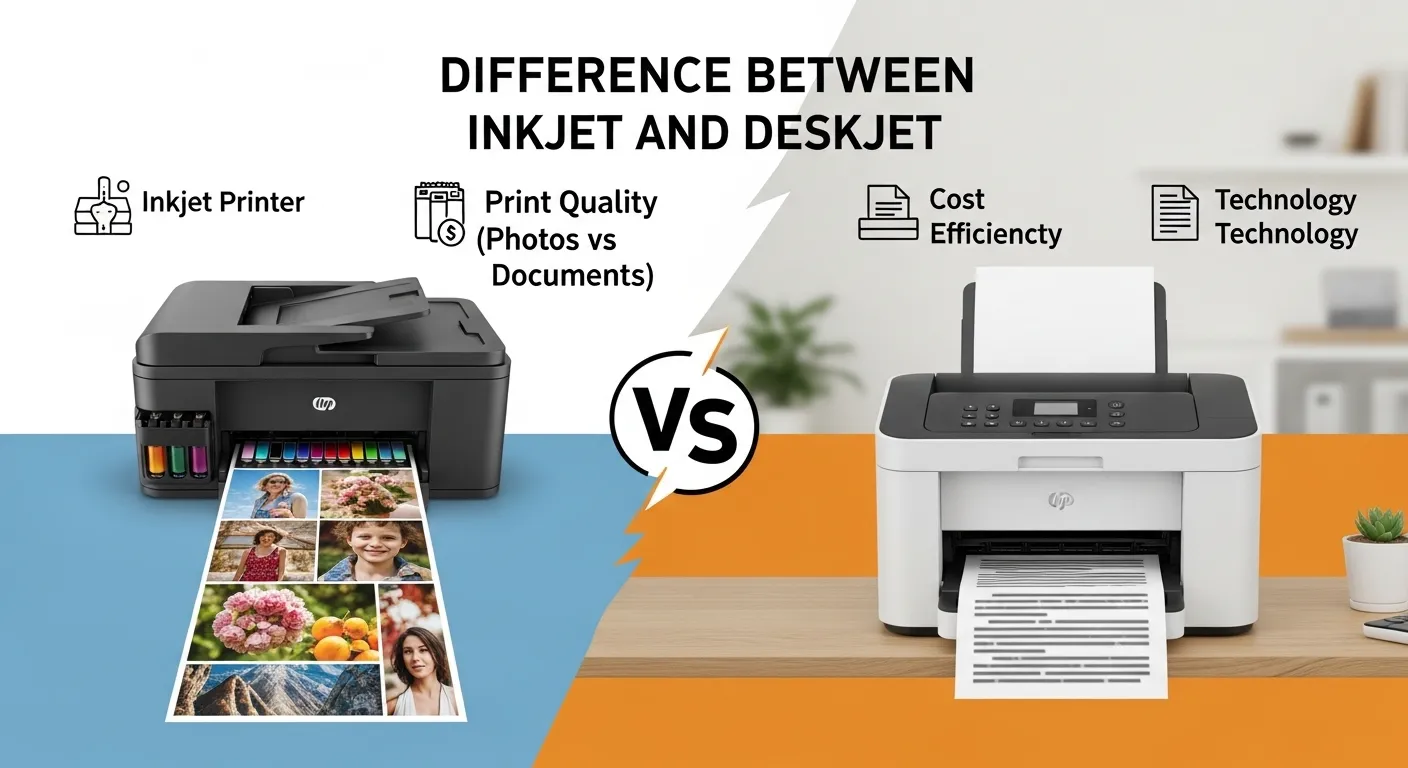
In simple terms, an inkjet printer is a type of printer that sprays liquid ink onto paper to create images and text. On the other hand, DeskJet is actually a brand name used by HP for its line of inkjet printers. The difference between inkjet and deskjet is often misunderstood because people assume they are separate technologies. In reality, DeskJet falls under the inkjet category. Knowing the difference between inkjet and deskjet helps users make smarter buying decisions and avoid confusion in both personal and professional settings.
Key Difference Between the Both
The main difference is that inkjet refers to a printing technology, while DeskJet is a specific product line (brand) that uses inkjet technology.
Why Is Their Difference Necessary to Know?
Understanding the difference between inkjet and deskjet is important for students, professionals, and businesses. It helps people choose the right printer based on needs like cost, quality, and performance. In society, where printing is essential for education, marketing, and documentation, knowing this distinction avoids misinformation and improves purchasing decisions. Experts benefit by communicating clearly, while learners build accurate technical knowledge.
Pronunciation
- Inkjet
- US: /ˈɪŋk.dʒɛt/
- UK: /ˈɪŋk.dʒet/
- DeskJet
- US: /ˈdɛsk.dʒɛt/
- UK: /ˈdesk.dʒet/
Now that the basics are clear, let’s explore the detailed comparison to fully understand their differences.
Difference Between Inkjet and Deskjet
1. Definition
- Inkjet: A general printing technology.
- Example 1: Canon inkjet printer used at home.
- Example 2: Epson inkjet printer for photos.
- DeskJet: A specific HP printer series.
- Example 1: HP DeskJet 2710.
- Example 2: HP DeskJet 4155.
2. Scope
- Inkjet: Broad category including many brands.
- Example 1: Brother inkjet models.
- Example 2: Epson EcoTank series.
- DeskJet: Limited to HP products only.
- Example 1: Entry-level HP DeskJet.
- Example 2: Wireless DeskJet models.
3. Brand Association
- Inkjet: Not tied to a single company.
- Example 1: Canon inkjet.
- Example 2: Epson inkjet.
- DeskJet: Exclusively HP.
- Example 1: HP DeskJet printers in offices.
- Example 2: HP DeskJet for home users.
4. Usage
- Inkjet: Used for general printing tasks.
- Example 1: Printing school assignments.
- Example 2: Photo printing.
- DeskJet: Designed for basic home and small office use.
- Example 1: Printing documents at home.
- Example 2: Scanning homework.
5. Technology
- Inkjet: Uses liquid ink sprayed through nozzles.
- Example 1: High-resolution images.
- Example 2: Color blending.
- DeskJet: Uses the same inkjet technology.
- Example 1: HP ink cartridges.
- Example 2: Standard color printing.
6. Variety
- Inkjet: Wide variety of models and features.
- Example 1: All-in-one printers.
- Example 2: Photo printers.
- DeskJet: Limited range compared to all inkjets.
- Example 1: Basic models.
- Example 2: Budget-friendly printers.
7. Price Range
- Inkjet: Available from low to high-end.
- Example 1: Cheap home printers.
- Example 2: Professional photo printers.
- DeskJet: Usually budget-friendly.
- Example 1: Affordable home printers.
- Example 2: Student-use printers.
8. Performance
- Inkjet: Can be high-performance or basic.
- Example 1: Fast office printers.
- Example 2: Slow home printers.
- DeskJet: Generally moderate performance.
- Example 1: Everyday printing.
- Example 2: Occasional use.
9. Target Users
- Inkjet: Wide audience.
- Example 1: Photographers.
- Example 2: Businesses.
- DeskJet: Mostly home users and students.
- Example 1: Homework printing.
- Example 2: Personal use.
10. Branding vs Technology
- Inkjet: A technology term.
- Example 1: Used in technical discussions.
- Example 2: Found in product descriptions.
- DeskJet: A marketing/brand term.
- Example 1: Seen on HP packaging.
- Example 2: Used in advertisements.
Nature and Behaviour
- Inkjet: Flexible, diverse, and widely adaptable across different industries. It behaves as a general solution for printing needs.
- DeskJet: Specific, consistent, and designed for simplicity. It behaves as a user-friendly product line focused on affordability.
Why People Are Confused About Their Use
People often confuse them because both terms are used interchangeably in everyday conversation. Marketing language and lack of technical awareness make users think DeskJet is a different technology rather than a subset of inkjet printers.
Table: Difference and Similarity
| Feature | Inkjet | DeskJet | Similarity |
| Type | Technology | Brand/Product line | Both are printers |
| Scope | Broad | Limited (HP only) | Used for printing |
| Usage | Wide range | Home/small office | Print documents and images |
| Technology | Ink-based | Ink-based | Same printing method |
| Cost | Varies | Budget-friendly | Affordable options available |
Which Is Better in What Situation?
Inkjet printers are better when you need variety and advanced features. If you are a photographer or business owner, inkjet printers provide high-quality color printing and flexibility. They suit professional environments where performance matters.
DeskJet printers are better for simple, everyday tasks. If you are a student or home user, DeskJet offers affordability and ease of use. It is ideal for occasional printing without needing advanced features.
Metaphors and Similes
- Inkjet is like a paintbrush, spreading colors smoothly.
- DeskJet is like a ready-made toolkit, simple and practical.
- Inkjet works like rain droplets forming images.
- DeskJet works like a basic pen for daily writing.
Connotative Meanings
- DeskJet
- Positive: Affordable, user-friendly
- Negative: Limited features
- Neutral: Home printer
- Example: “She bought a DeskJet for home use.”
- Inkjet
- Positive: Advanced, versatile
- Negative: Expensive (in some cases)
- Neutral: Printing technology
- Example: “He chose inkjet for professional quality.”
Idioms or Proverbs
(Not directly related, but creatively adapted)
- “Put pen to paper” → Use a DeskJet for quick printing
- “Color outside the lines” → Inkjet allows creative printing
Works in Literature
(No direct works specifically named after these terms, but related themes exist)
- The Machine Stops – E.M. Forster (Science Fiction, 1909)
- Player Piano – Kurt Vonnegut (Dystopian, 1952)
Movies Related to Printing/Technology Themes
- Office Space (1999, USA)
- The Social Network (2010, USA)
FAQs
1. Is DeskJet the same as inkjet?
No, DeskJet is a type of inkjet printer made by HP.
2. Which is cheaper?
DeskJet printers are usually more affordable.
3. Are all inkjet printers DeskJet?
No, only HP DeskJet printers fall under that name.
4. Which is better for photos?
High-end inkjet printers are better for photo printing.
5. Why do people mix them up?
Because DeskJet uses inkjet technology, making the terms seem similar.
How Both Are Useful for Surroundings
Inkjet printers support creative industries like photography and design, enhancing visual communication. DeskJet printers make everyday printing accessible, supporting education and home productivity. Together, they contribute to efficient documentation and communication in society.
Final Words for Both
Inkjet represents innovation and versatility, while DeskJet stands for simplicity and affordability. Both serve different yet overlapping purposes in the printing world.
Conclusion
Understanding the difference between inkjet and deskjet clears a common misconception. While inkjet is a broad printing technology, DeskJet is a specific brand line within it. This distinction helps users make informed decisions based on their needs, whether for professional or personal use.
By recognizing their roles, features, and applications, individuals can choose the right printer with confidence. Ultimately, both play essential roles in modern life, making printing accessible, efficient, and adaptable for everyone.

I am a professional SEO content writer specialising in comparison-based and grammar-focused articles. Through my website GrammarCompare.com, I help readers clearly understand the difference between confusing terms with well-researched, easy-to-read content. My expertise lies in focusing on clarity, accuracy, and practical explanations that improve both knowledge and writing skills.