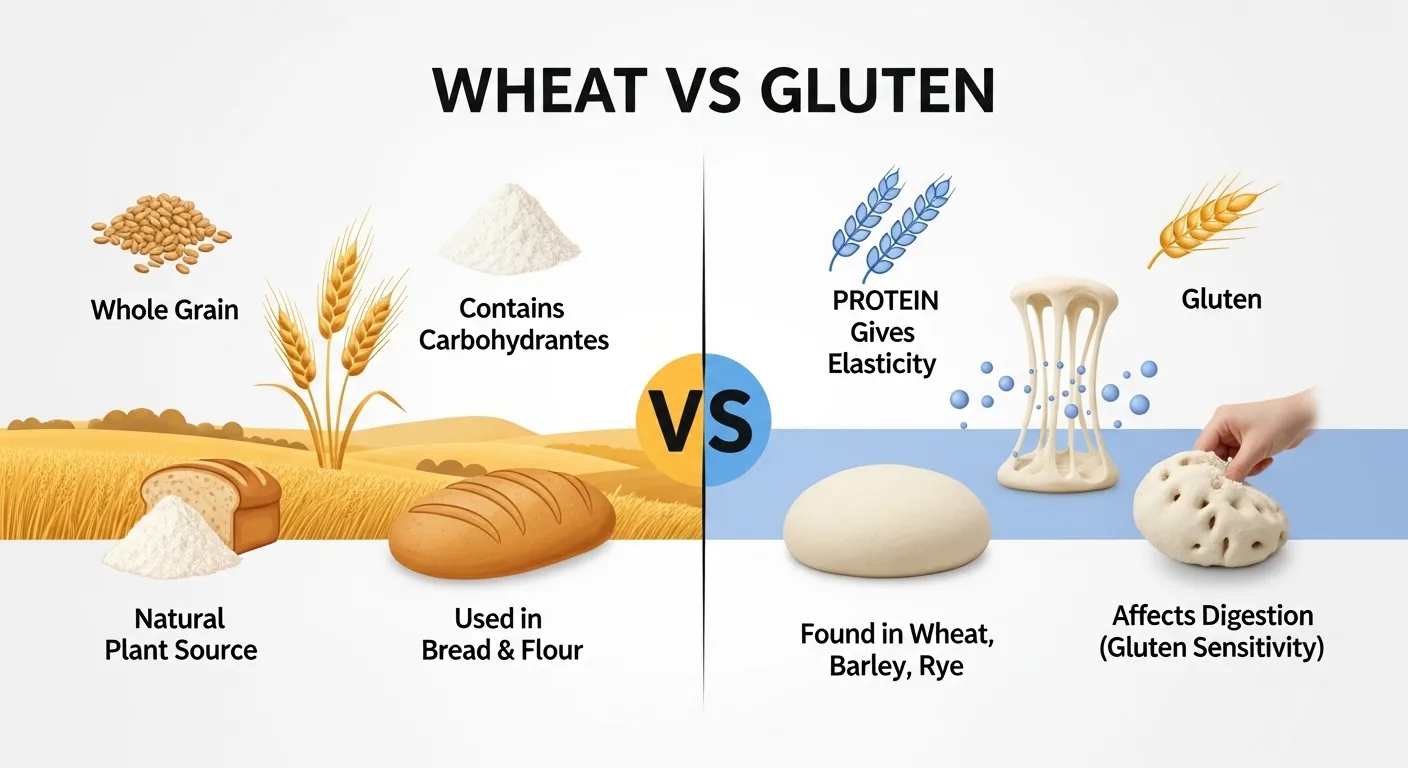
Wheat is a grain used to make many foods, while gluten is a protein found inside wheat and some other grains.
Understanding the difference between wheat and gluten is important for making informed dietary choices, especially for people with sensitivities or allergies. Imagine eating bread, pasta, or baked goods—these foods often contain wheat, but what actually affects some people is gluten, a protein inside the grain.
The difference between wheat and gluten lies in their nature and role in food. Wheat is a whole grain used as a staple ingredient worldwide, while Gluten is a group of proteins responsible for the elasticity of dough. Learning the difference between wheat and gluten helps individuals manage diets, especially those with allergies or intolerances. By understanding the difference between wheat and gluten, you can choose foods that suit your health needs and lifestyle.
Pronunciation
Wheat
US: /wiːt/
Gluten
US: /ˈɡluːtən/
Key Difference Between the Both
The main difference between wheat and gluten is that wheat is a type of grain, while gluten is a protein found within wheat and some other grains like barley and rye.
Why Is Their Difference Necessary to Know for Learners and Experts?
Knowing the difference between wheat and gluten is essential for nutritionists, food experts, and everyday consumers. For learners, it clarifies common dietary terms. For experts, understanding the difference between wheat and gluten helps in diagnosing and managing food-related conditions.
In society, this knowledge is especially important for people with Celiac disease or gluten sensitivity. Misunderstanding the difference between wheat and gluten can lead to incorrect dietary choices and health issues.
Difference Between Wheat and Gluten
1. Definition
Wheat is a cereal grain. Gluten is a protein found in certain grains.
Examples
Wheat:
- Flour used in bread.
- Whole wheat grains.
Gluten:
- Protein in dough.
- Gives elasticity to bread.
2. Nature
Wheat is a food ingredient. Gluten is a component within that ingredient.
Examples
Wheat:
- Used as raw grain.
- Processed into flour.
Gluten:
- Extracted protein.
- Found inside grains.
3. Composition
Wheat contains carbohydrates, fiber, and protein. Gluten is specifically a protein.
Examples
Wheat:
- Nutritional grain.
- Contains multiple nutrients.
Gluten:
- Protein structure.
- Not a whole food.
4. Function in Food
Wheat provides the base for many foods. Gluten gives structure and elasticity.
Examples
Wheat:
- Bread base.
- Pasta ingredient.
Gluten:
- Helps dough rise.
- Creates chewy texture.
5. Sources
Wheat is a specific grain. Gluten is found in wheat, barley, and rye.
Examples
Wheat:
- Wheat flour.
- Wheat bread.
Gluten:
- Found in multiple grains.
- Present in baked goods.
6. Dietary Issues
Wheat can cause allergies. Gluten can cause intolerance or autoimmune reactions.
Examples
Wheat:
- Wheat allergy.
- Digestive issues.
Gluten:
- Gluten intolerance.
- Celiac disease.
7. Presence in Food Labels
Wheat is listed as an ingredient. Gluten may be indicated as “contains gluten.”
Examples
Wheat:
- Listed in ingredients.
- Easy to identify.
Gluten:
- Mentioned in allergen info.
- May be hidden.
8. Processing
Wheat can be refined or whole. Gluten can be isolated or removed.
Examples
Wheat:
- Whole wheat flour.
- Refined flour.
Gluten:
- Gluten-free products remove it.
- Added for texture.
9. Health Impact
Wheat is nutritious for most people. Gluten may cause issues for some.
Examples
Wheat:
- Provides energy.
- Contains fiber.
Gluten:
- Safe for many.
- Harmful for sensitive individuals.
10. Usage
Wheat is widely used in food production. Gluten is used to improve texture.
Examples
Wheat:
- Bakery products.
- Cereals.
Gluten:
- Processed foods.
- Meat substitutes.
Nature and Behaviour of Both
Wheat is a staple grain that serves as a major food source worldwide. Gluten is a protein within certain grains that affects texture and digestion.
Why People Are Confused About Their Use?
People often confuse wheat and gluten because gluten is found in wheat. However, not all gluten comes only from wheat, and wheat contains more than just gluten.
Table Showing Difference and Similarity
| Feature | Wheat | Gluten | Similarity |
| Type | Grain | Protein | Food-related |
| Nature | Whole ingredient | Component | Found in foods |
| Function | Base food | Provides texture | Used in baking |
| Health | Nutritious | Problematic for some | Dietary concern |
| Source | Specific grain | Multiple grains | Linked together |
Which Is Better in What Situation?
Wheat
Wheat is better for people who want a nutritious and energy-rich food source and have no allergies.
Gluten
Gluten is useful in baking for texture, but avoiding it is better for those with sensitivities or celiac disease.
How the Keywords Are Used in Metaphors and Similes
Examples:
- “He separated truth from lies like wheat from chaff.”
- “The situation stuck together like gluten in dough.”
Connotative Meaning
Wheat
Connotation: Nourishment, abundance.
Example:
“Wheat symbolizes growth and prosperity.”
Gluten
Connotation: Binding, sticking.
Example:
“Gluten-like bonds held the team together.”
Idioms or Proverbs Related to the Words
Separate the wheat from the chaff
Example:
“The test helped separate the wheat from the chaff.”
Works in Literature
- The Grapes of Wrath – John Steinbeck, 1939 (features wheat farming themes)
- Various nutrition and health books discussing gluten
Movie Names Made on the Keywords
- Interstellar (2014, USA) – features wheat fields prominently
- Food documentaries discussing gluten and diet trends
Five Frequently Asked Questions
1. What is the main difference between wheat and gluten?
Wheat is a grain, while gluten is a protein found in it.
2. Is gluten only found in wheat?
No, also in barley and rye.
3. Can you eat wheat on a gluten-free diet?
No, because wheat contains gluten.
4. Is wheat unhealthy?
No, it is healthy for most people.
5. Who should avoid gluten?
People with celiac disease or gluten sensitivity.
How Both Are Useful for Surroundings
Wheat supports global food supply, while gluten plays a key role in food texture and production.
Final Words for the Both
Wheat and gluten are closely related but different. Understanding both helps in making healthier dietary choices.
Conclusion
The difference between wheat and gluten lies in their nature and role. Wheat is a whole grain used in many foods, while gluten is a protein within wheat that affects texture and digestion. Understanding the difference between wheat and gluten is essential for managing diets and health conditions. By learning the difference between wheat and gluten, individuals can make informed food choices and maintain better health.

I am a professional SEO content writer specialising in comparison-based and grammar-focused articles. Through my website GrammarCompare.com, I help readers clearly understand the difference between confusing terms with well-researched, easy-to-read content. My expertise lies in focusing on clarity, accuracy, and practical explanations that improve both knowledge and writing skills.