In a busy supermarket aisle, a shopper once paused in confusion while holding two products one labeled “organic vegetables” and the other “natural juice.” Both looked healthy, green, and trustworthy. Yet, the labels meant very different things. This confusion reflects the real-world difference between organic and natural, where marketing terms often blur consumer understanding. The difference between organic and natural becomes even more important when people try to choose healthier food options. Many buyers assume both are the same, but the difference between organic and natural lies in regulation, farming methods, and ingredient standards. Understanding this helps people make safer and more informed choices in daily life.
Key Difference Between Organic and Natural
Organic products are strictly regulated and grown without synthetic chemicals, while natural products are minimally processed but not always regulated.
Why Knowing the Difference Matters
Understanding the difference between organic and natural is important for consumers, nutritionists, and farmers because it affects health choices, food labeling, and market trust in society.
Pronunciation
- Organic
- US: /ɔːrˈɡænɪk/
- UK: /ɔːˈɡænɪk/
- Natural
- US: /ˈnætʃərəl/
- UK: /ˈnætʃrəl/
Now let’s explore the difference between organic and natural in detail.
H2: Difference Between Organic and Natural
1. Definition
- Organic: Produced using certified farming methods without synthetic chemicals.
- Example 1: Organic apples grown without pesticides.
- Example 2: Organic milk from grass-fed cows.
- Natural: Made with minimal processing and no artificial additives (not strictly regulated).
- Example 1: Natural fruit juice with no added sugar.
- Example 2: Natural snacks made from basic ingredients.
2. Regulation
- Organic: Strictly regulated by certification bodies.
- Example 1: USDA Organic certification.
- Example 2: EU Organic logo standards.
- Natural: No strict global regulation.
- Example 1: “Natural” label on packaged chips.
- Example 2: “Natural” drinks without certification.
3. Farming Methods
- Organic: Uses organic fertilizers and crop rotation.
- Example 1: Compost-based farming.
- Example 2: Biological pest control.
- Natural: May use conventional farming.
- Example 1: Standard pesticide use allowed.
- Example 2: Mixed farming methods.
4. Chemical Usage
- Organic: No synthetic chemicals allowed.
- Example 1: No chemical pesticides.
- Example 2: No artificial fertilizers.
- Natural: May still contain some processed ingredients.
- Example 1: Natural flavors from labs.
- Example 2: Preservatives in small amounts.
5. Certification Process
- Organic: Requires certification and inspection.
- Example 1: Annual farm inspection.
- Example 2: Certification audit reports.
- Natural: No certification required.
- Example 1: Brand self-labeling.
- Example 2: Marketing-based claims.
6. Price
- Organic: Usually more expensive.
- Example 1: Organic vegetables cost more.
- Example 2: Organic dairy premium pricing.
- Natural: Often moderately priced.
- Example 1: Natural snacks cheaper than organic.
- Example 2: Natural drinks in mid-range pricing.
7. Shelf Life
- Organic: Shorter shelf life due to no preservatives.
- Example 1: Organic milk spoils faster.
- Example 2: Organic bread lasts fewer days.
- Natural: May have longer shelf life.
- Example 1: Natural juice with stabilizers.
- Example 2: Packaged natural snacks.
8. Nutritional Value
- Organic: Often considered more nutrient-rich.
- Example 1: Organic fruits higher antioxidants.
- Example 2: Organic vegetables fresher.
- Natural: Nutritional value varies.
- Example 1: Natural chips still high in salt.
- Example 2: Natural juice may contain sugar.
9. Environmental Impact
- Organic: Eco-friendly farming practices.
- Example 1: Soil conservation methods.
- Example 2: Reduced water pollution.
- Natural: Impact depends on production.
- Example 1: Factory-made natural foods.
- Example 2: Mixed environmental footprint.
10. Label Accuracy
- Organic: Verified and trustworthy.
- Example 1: Certified organic seal.
- Example 2: Government-approved labeling.
- Natural: Often vague marketing term.
- Example 1: “100% natural” snacks.
- Example 2: “Natural flavor” drinks.
Nature and Behaviour
Organic
Organic products behave like strictly controlled systems focused on health, sustainability, and environmental protection. They follow fixed rules and certification standards.
Natural
Natural products behave more loosely, often relying on marketing language. They can vary widely in quality, ingredients, and production methods.
Why People Get Confused
People confuse organic and natural because both sound healthy and are often used interchangeably in advertising. However, only “organic” has strict legal meaning, while “natural” is more flexible and unregulated.
Table: Difference and Similarity
| Feature | Organic | Natural |
| Regulation | Strict | Weak or none |
| Chemicals | No synthetic chemicals | May contain minimal additives |
| Certification | Required | Not required |
| Farming | Organic methods | Conventional possible |
| Goal | Sustainability | Health perception |
Similarity: Both are marketed as healthier food options.
Which is Better in What Situation?
Organic products are better for people who want strict health standards and environmental protection. For example, if someone wants pesticide-free food and long-term health benefits, organic is the best choice. Organic farming also supports soil health and biodiversity.
Natural products are better for people who want minimally processed food at a lower cost. For example, natural snacks or drinks may be suitable for everyday consumption when organic options are not available. The difference between organic and natural shows that choice depends on budget, availability, and personal health priorities.
Metaphors and Similes
- Organic is like a carefully maintained garden with strict rules.
- Natural is like a wild garden growing freely without strict control.
Connotative Meaning
Organic
- Meaning: Pure, certified, controlled
- Connotation: Positive
- Example: “Organic food is trusted for healthy living.”
Natural
- Meaning: Simple, less processed
- Connotation: Neutral to positive
- Example: “Natural ingredients feel closer to real food.”
Idioms and Proverbs
- “Back to nature” (used for natural lifestyle)
- Example: Many people prefer back to nature food choices.
- “Pure as nature intended” (linked to organic idea)
- Example: Organic farms aim to be pure as nature intended.
Works in Literature
- The Omnivore’s Dilemma – Food culture, Michael Pollan (2006)
- Silent Spring – Environmental science, Rachel Carson (1962)
- Fast Food Nation – Food industry critique, Eric Schlosser (2001)
Movies
- Food, Inc. (2008, USA) – Food industry and organic farming
- Super Size Me (2004, USA) – Fast food vs natural eating habits
- The Biggest Little Farm (2018, USA) – Organic farming journey
Frequently Asked Questions
1. Is organic the same as natural?
No, organic is strictly regulated, natural is not.
2. Which is healthier?
Organic is generally considered healthier due to strict farming rules.
3. Can natural food be organic?
Yes, but not all natural foods are organic.
4. Why is organic food expensive?
Because it requires certification and careful farming.
5. Is natural food always safe?
Not always, as it is not strictly regulated.
How Both Are Useful for Surroundings
Organic farming protects soil, water, and biodiversity. Natural foods reduce chemical processing and may lower industrial impact. Both contribute to healthier food awareness and encourage better consumer choices.
Final Words
Organic and natural both represent healthier lifestyles, but they are not the same. Organic is strict and certified, while natural is flexible and marketing-based. Understanding their roles helps consumers choose wisely.
Conclusion
The difference between organic and natural is essential for making informed food choices in today’s health-conscious world. Organic products follow strict farming and certification standards, ensuring chemical-free and environmentally friendly production. Natural products, on the other hand, focus on minimal processing but lack strict regulation. While both are associated with healthy living, their meanings and reliability differ significantly. Consumers often confuse the two due to marketing language, but knowing the difference between organic and natural helps avoid misconceptions. Ultimately, the right choice depends on personal health goals, budget, and awareness. Understanding both terms empowers people to make smarter, safer, and more sustainable dietary decisions.
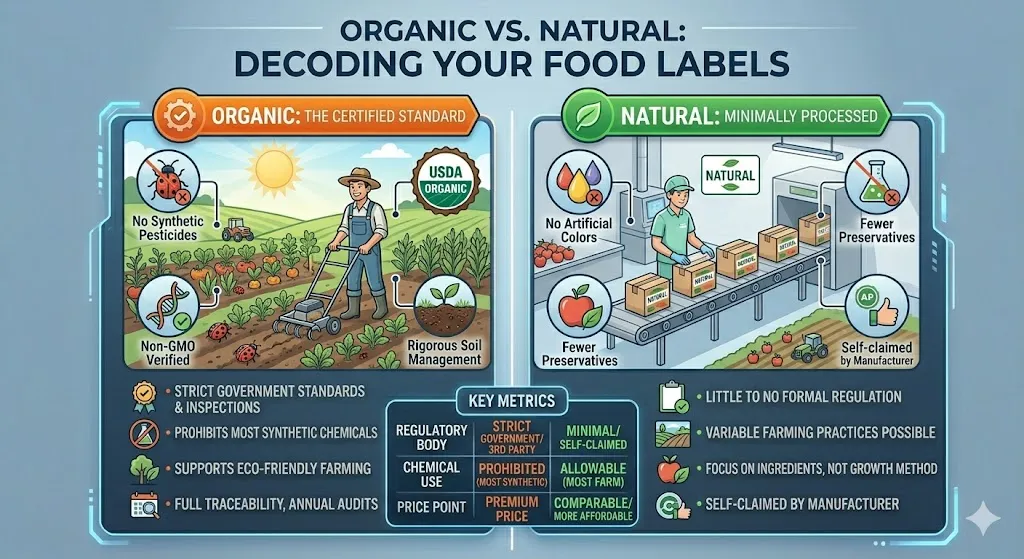
To navigate the grocery aisle effectively, it is vital to distinguish between Organic and Natural, as one represents a legally protected farming standard while the other is often a broad marketing claim. While both appear in the context of healthy living, their reliability and underlying meanings differ significantly.
1. Organic: The Certified Standard
The “Organic” label is a promise of a specific, strictly regulated farming and production process.
- Strict Certification: Organic products must follow rigorous farming and certification standards.
- Audit Trail: The process involves full traceability and annual audits to ensure compliance.
- Chemical Restrictions: These standards prohibit the use of most synthetic chemicals.
- Input Requirements: Organic production is strictly Non-GMO verified.
- Environmental Focus: The goal is to ensure environmentally friendly production through rigorous soil management.
2. Natural: Minimally Processed
The “Natural” label focuses on the composition of the final product rather than the method used to grow the ingredients.
- Processing Focus: Natural products focus on minimal processing of ingredients.
- Lack of Regulation: Unlike organic, natural products lack strict government or third-party regulation.
- Self-Claimed: The “Natural” label is often self-claimed by the manufacturer.
- Variable Farming: Because the focus is on ingredients rather than growth methods, variable farming practices (including the use of pesticides) are possible.
- Additive Restrictions: These products typically aim for no artificial colors and fewer preservatives.
Consumer Impact and Decision Making
Understanding these differences empowers people to make smarter, safer, and more sustainable dietary decisions.
- Avoiding Misconceptions: Knowing the difference helps consumers avoid misconceptions caused by marketing language.
- Personal Goals: The right choice between the two depends on an individual’s personal health goals, budget, and awareness.
- Informed Choices: This knowledge is essential for making informed food choices in a health-conscious world.

I am a professional SEO content writer specialising in comparison-based and grammar-focused articles. Through my website GrammarCompare.com, I help readers clearly understand the difference between confusing terms with well-researched, easy-to-read content. My expertise lies in focusing on clarity, accuracy, and practical explanations that improve both knowledge and writing skills.