Imagine a father planning his future and deciding to secure his family’s financial stability. He creates a legal arrangement to manage his assets for his children. In this situation, he becomes the trustor, the person who creates the trust, while the person he appoints to manage those assets becomes the trustee. This simple real-life example highlights the difference between trustor and trustee. Many people hear these terms in legal or financial discussions but struggle to understand their roles. Knowing the difference between trustor and trustee is essential for making informed decisions. Whether you are planning assets or studying law, understanding the difference between trustor and trustee helps avoid confusion and ensures clarity in responsibility and authority.
Key Difference Between the Both
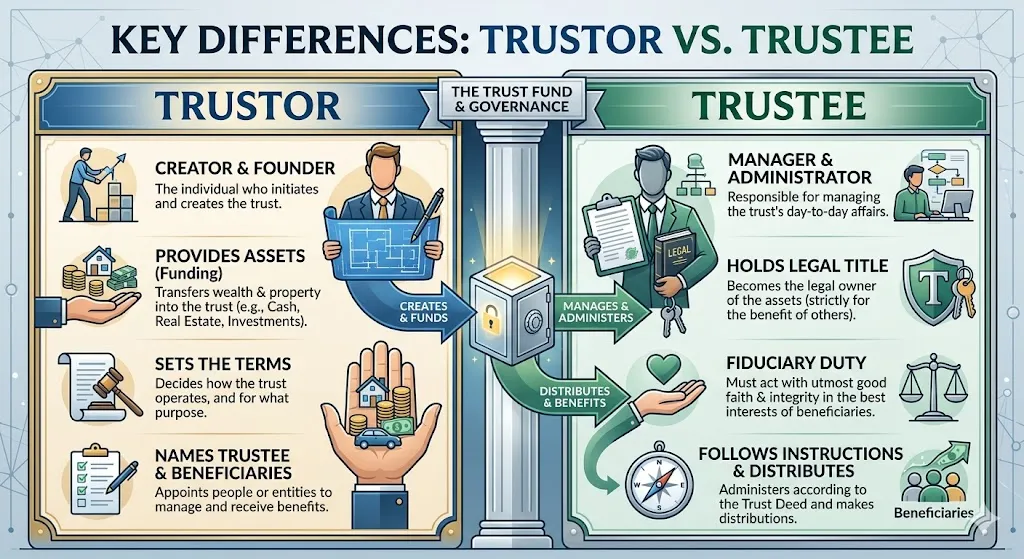
The trustor creates and funds the trust, while the trustee manages and administers the trust according to its terms.
Why Is Their Difference Necessary to Know for Learners and Experts?
Understanding this difference is important in legal, financial, and social contexts. For learners, it builds a strong foundation in legal knowledge. For professionals, it ensures proper handling of assets and responsibilities. In society, trusts are used for wealth management, charity, and inheritance planning, so knowing these roles helps maintain fairness and accountability.
Pronunciation
- Trustor
- US: /ˈtrʌs.tɔːr/
- UK: /ˈtrʌs.tɔː/
- Trustee
- US: /ˌtrʌsˈtiː/
- UK: /ˌtrʌsˈtiː/
With these basics in mind, let’s explore the detailed differences between these two important roles.
Difference Between the Keywords
1. Definition
- Trustor: The person who creates the trust.
- Example 1: A parent creating a trust for children
- Example 2: A business owner setting up asset protection
- Trustee: The person who manages the trust.
- Example 1: A lawyer managing the trust
- Example 2: A bank acting as trustee
2. Role
- Trustor: Initiates the trust.
- Example 1: Drafting trust documents
- Example 2: Deciding beneficiaries
- Trustee: Executes the trust.
- Example 1: Distributing funds
- Example 2: Managing investments
3. Ownership
- Trustor: Transfers ownership to the trust.
- Example 1: Transferring property
- Example 2: Assigning assets
- Trustee: Holds legal title.
- Example 1: Managing property legally
- Example 2: Controlling accounts
4. Authority
- Trustor: Sets rules and conditions.
- Example 1: Defining terms
- Example 2: Setting restrictions
- Trustee: Follows those rules.
- Example 1: Acting within guidelines
- Example 2: Obeying legal duties
5. Responsibility
- Trustor: Limited after creation.
- Example 1: No daily involvement
- Example 2: Advisory role only
- Trustee: Ongoing responsibility.
- Example 1: Regular management
- Example 2: Reporting to beneficiaries
6. Legal Position
- Trustor: Creator of legal arrangement.
- Example 1: Signs agreement
- Example 2: Establishes trust
- Trustee: Fiduciary role.
- Example 1: Must act honestly
- Example 2: Protects beneficiaries
7. Control
- Trustor: May retain some control (in revocable trusts).
- Example 1: Can modify trust
- Example 2: Can revoke trust
- Trustee: Controls operations.
- Example 1: Makes investment decisions
- Example 2: Handles distributions
8. Risk
- Trustor: Lower risk after setup.
- Example 1: Assets transferred
- Example 2: Limited liability
- Trustee: Higher legal risk.
- Example 1: Liable for mismanagement
- Example 2: Accountable in court
9. Duration of Role
- Trustor: Temporary role.
- Example 1: Ends after creation
- Example 2: Minimal ongoing duty
- Trustee: Long-term role.
- Example 1: Manages for years
- Example 2: Continues until trust ends
10. Relationship with Beneficiaries
- Trustor: Indirect relationship.
- Example 1: Sets benefits
- Example 2: Chooses recipients
- Trustee: Direct relationship.
- Example 1: Communicates regularly
- Example 2: Distributes benefits
Nature and Behaviour
- Trustor: Strategic, planning-oriented, and focused on future security.
- Trustee: Responsible, ethical, and detail-oriented, ensuring proper execution of duties.
Why People Are Confused About Their Use?
People often confuse these terms because both are involved in the same legal arrangement. Their names are similar, and their roles overlap in purpose, though not in function.
Table: Difference and Similarity
| Feature | Trustor | Trustee | Similarity |
| Role | Creator | Manager | Both part of a trust |
| Responsibility | Limited | Ongoing | Both have legal duties |
| Control | Sets rules | Applies rules | Work toward same goal |
| Risk | Lower | Higher | Both accountable legally |
| Function | Establishes trust | Operates trust | Both ensure asset protection |
Which Is Better in What Situation?
Trustor is better when you want to establish control over your assets and ensure they are distributed according to your wishes. This role suits individuals planning their estate or securing their family’s future. It allows you to design the structure and rules of the trust while minimizing future involvement.
Trustee is better when responsible management and execution are needed. This role is ideal for professionals or institutions capable of handling financial and legal duties. A trustee ensures that the trust operates smoothly and beneficiaries receive their rights properly.
Metaphors and Similes
- Trustor: “He was the architect of the family’s financial future.”
- Trustee: “She acted like a guardian, protecting every detail of the trust.”
Connotative Meaning
- Trustor: Positive (planning, authority)
- Example: “She became the trustor of a secure legacy.”
- Trustee: Positive (responsibility, reliability)
- Example: “He proved to be a trustworthy trustee.”
Idioms and Proverbs
- “In trust we believe” (conceptual usage)
- Example: “In trust we believe when handing over responsibilities.”
- “A man is only as good as his word”
- Example: “A trustee must remember that a man is only as good as his word.”
Works in Literature
- “Bleak House” (Legal fiction, Charles Dickens, 1853)
- “The Trust” (Drama, Ronald Harwood, 2001)
Movies Related to Keywords
- “The Trustee” (2017, USA)
- “Trust” (2010, USA)
FAQs
1. Can a trustor also be a trustee?
Yes, in some trusts, the same person can perform both roles.
2. Who has more power?
The trustor sets the rules, but the trustee controls daily operations.
3. Is a trustee paid?
Often yes, especially if it is a professional role.
4. Can a trustee be changed?
Yes, depending on the trust terms.
5. What happens if a trustee fails?
They can be removed or held legally accountable.
How Both Are Useful for Surroundings
Trustors and trustees help maintain financial stability, protect family wealth, and support charitable causes. Their roles contribute to organized asset management in society.
Final Words for Both
The trustor builds the vision, while the trustee ensures its success. Both roles are essential and complementary.
Conclusion
Understanding the difference between trustor and trustee is crucial for anyone dealing with legal or financial planning. While the trustor creates and defines the trust, the trustee manages and executes it responsibly. Each role has its own importance, and together they ensure proper handling of assets and protection of beneficiaries. By clearly distinguishing between these two, individuals can make better decisions, avoid legal confusion, and create effective trust arrangements. This knowledge empowers both beginners and professionals to navigate the legal world with confidence and clarity.
1. The Strategic Visionary vs. The Hands-On Operator
- The Trustor (The Architect): The trustor defines the ultimate purpose of the trust. They dictate why the trust is being established, determine which assets will populate it, select the beneficiaries, and outline the specific rules for how and when assets should be distributed. They effectively author the legal playbook (the trust deed).
- The Trustee (The Executive): The trustee does not create or alter the rules; their sole responsibility is to follow them seamlessly. They manage the daily administrative operations, which includes interfacing with financial institutions, keeping meticulous accounting records, filing trust tax returns, and managing any physical properties held within the trust.
2. Relinquishing Ownership vs. Holding Legal Title
- The Trustor (The Capital Provider): The trustor holds the original, outright ownership of the assets—whether it is real estate, cash, stocks, or business interests. To bring the trust to life, they must formally transfer these assets into the trust’s name, often relinquishing personal ownership to achieve asset protection or tax benefits.
- The Trustee (The Legal Guardian): Upon transfer, the trustee takes official legal title to the assets. However, they do not own them in a traditional sense; they hold them strictly in a fiduciary capacity. They are responsible for investing the assets prudently and safeguarding the wealth so it remains viable for the trustor’s long-term objectives.
3. Subjective Intent vs. Strict Objective Duty
- The Trustor (Personal & Emotional Drivers): A trustor’s decisions are frequently driven by highly personal or emotional goals. This might include ensuring a child’s college tuition is covered, protecting a vulnerable relative from burning through an inheritance, or setting aside funds for a favorite charitable cause.
- The Trustee (The Fiduciary Standard): The trustee must act with absolute objectivity. They are bound by a strict fiduciary duty, meaning they are legally obligated to put the beneficiaries’ best interests above all else—including their own. For example, if a trustor’s deed stipulates that a beneficiary cannot receive their inheritance until graduating from university, the trustee acts as the objective enforcer who must verify the diploma before distributing any funds.
Core Comparison Matrix
| Feature | The Trustor’s Role | The Trustee’s Role |
| Primary Action | Creates the legal structure and funds it with assets. | Manages the daily operations and distributes the assets. |
| Asset Relationship | Transfers ownership away to the trust entity. | Holds legal title to the assets exclusively for others. |
| Operational Timeline | Highly active during the creation and initial funding phases. | Active and responsible throughout the entire lifespan of the trust. |
| Core Philosophy | Legacy planning, intent, and long-term strategy. | Compliance, fiduciary responsibility, and risk management. |
Summary: Without the Trustor, the trust lacks funding, purpose, and direction. Without the Trustee, the trust lacks the legal protection, administrative execution, and oversight required to survive legal scrutiny. Together, they form a highly secure, complementary legal mechanism that successfully preserves a legacy across generations.

I am a professional SEO content writer specialising in comparison-based and grammar-focused articles. Through my website GrammarCompare.com, I help readers clearly understand the difference between confusing terms with well-researched, easy-to-read content. My expertise lies in focusing on clarity, accuracy, and practical explanations that improve both knowledge and writing skills.