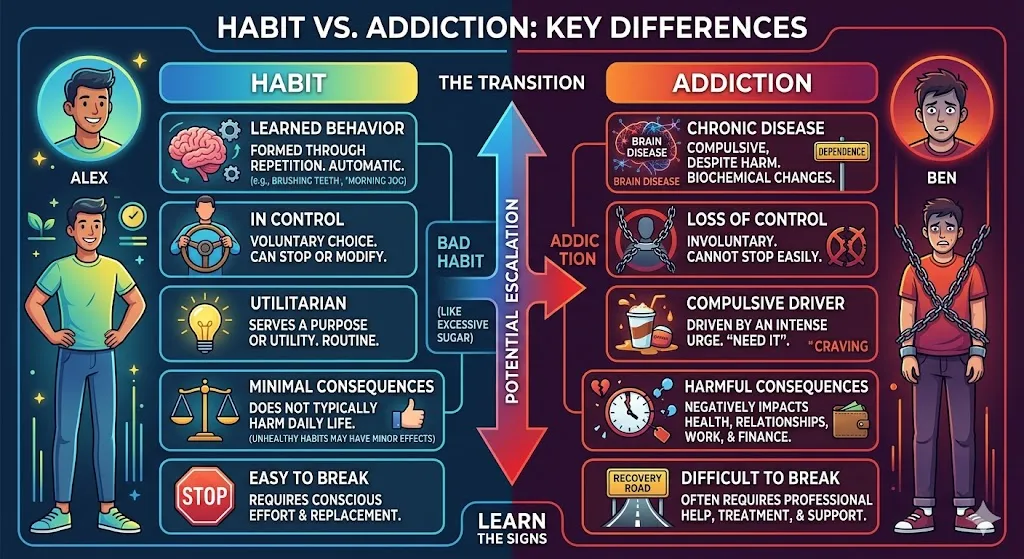
A young professional once started drinking coffee every morning to stay active at work. Over time, it became part of her daily routine. One day, she tried to skip it and felt uneasy, irritable, and unable to focus. What began as a simple habit slowly turned into something stronger. This real-life situation explains the difference between habit and addiction. A habit is a regular behavior that can be controlled, while addiction is a compulsive need that is hard to stop. Understanding the difference between habit and addiction is important for personal growth. In fact, the difference between habit and addiction helps people recognize harmful patterns early. By learning the difference between habit and addiction, individuals can maintain balance and protect their mental and physical well-being.
Key Difference Between the Both
A habit is a repeated action performed by choice, while addiction is a compulsive behavior driven by dependence and lack of control.
Why Is Their Difference Necessary to Know for Learners and Experts?
Knowing the difference between habit and addiction is essential because it helps individuals identify whether a behavior is harmless or harmful. For learners, it builds awareness about self-discipline and lifestyle choices. For experts such as psychologists and counselors, it helps in diagnosing and treating behavioral issues. In society, understanding this difference promotes healthier living, reduces stigma, and supports people struggling with serious dependencies.
Pronunciation
- Habit
- US: /ˈhæb.ɪt/
- UK: /ˈhæb.ɪt/
- Addiction
- US: /əˈdɪk.ʃən/
- UK: /əˈdɪk.ʃən/
Let’s now explore the detailed comparison to fully understand their differences.
Difference Between Habit and Addiction
1. Definition
- Habit: A regular practice done routinely.
- Example 1: Brushing teeth every morning.
- Example 2: Drinking tea after lunch.
- Addiction: A compulsive need for a behavior or substance.
- Example 1: Smoking daily despite harm.
- Example 2: Excessive gaming without control.
2. Control
- Habit: Can be controlled easily.
- Example 1: Skipping a workout occasionally.
- Example 2: Changing sleep schedule.
- Addiction: Difficult to control.
- Example 1: Craving cigarettes.
- Example 2: Unable to stop social media use.
3. Impact on Health
- Habit: Usually neutral or positive.
- Example 1: Exercising daily.
- Example 2: Reading books regularly.
- Addiction: Often harmful.
- Example 1: Alcohol abuse.
- Example 2: Drug dependency.
4. Psychological Dependence
- Habit: Little to no dependence.
- Example 1: Drinking water regularly.
- Example 2: Morning walks.
- Addiction: Strong mental dependence.
- Example 1: Anxiety without the substance.
- Example 2: Mood swings when deprived.
5. Formation
- Habit: Developed through repetition.
- Example 1: Daily journaling.
- Example 2: Practicing a skill.
- Addiction: Develops through repeated exposure and dependency.
- Example 1: Frequent alcohol use.
- Example 2: Gambling regularly.
6. Consequences
- Habit: Minimal negative consequences.
- Example 1: Slight inconvenience if skipped.
- Example 2: No serious harm.
- Addiction: Serious consequences.
- Example 1: Health problems.
- Example 2: Relationship issues.
7. Awareness
- Habit: Person is aware and mindful.
- Example 1: Choosing to meditate.
- Example 2: Planning daily routine.
- Addiction: Often denial or lack of awareness.
- Example 1: Ignoring excessive drinking.
- Example 2: Justifying harmful behavior.
8. Flexibility
- Habit: Flexible and adaptable.
- Example 1: Changing diet habits.
- Example 2: Adjusting study time.
- Addiction: Rigid and fixed.
- Example 1: Needing a substance daily.
- Example 2: Fixed compulsive routine.
9. Withdrawal Symptoms
- Habit: No withdrawal symptoms.
- Example 1: Skipping tea causes no issues.
- Example 2: Missing a walk feels normal.
- Addiction: Causes withdrawal symptoms.
- Example 1: Headaches without caffeine.
- Example 2: Anxiety without drugs.
10. Professional Help
- Habit: Rarely needed.
- Example 1: Self-improvement routines.
- Example 2: Personal discipline.
- Addiction: Often required.
- Example 1: Therapy sessions.
- Example 2: Rehabilitation programs.
Nature and Behaviour
- Habit: Stable, controlled, and often beneficial. It reflects discipline and routine.
- Addiction: Compulsive, uncontrollable, and harmful. It overrides rational decision-making.
Why People Are Confused About Their Use?
People confuse them because both involve repeated actions. A strong habit may look like addiction, especially when done daily. However, the key difference lies in control and consequences, which are often overlooked.
Difference and Similarity Table
| Aspect | Habit | Addiction | Similarity |
| Meaning | Regular behavior | Compulsive behavior | Both involve repetition |
| Control | High | Low | Done frequently |
| Impact | Positive/Neutral | Negative | Affect lifestyle |
| Flexibility | Flexible | Rigid | Can become routine |
| Dependence | None | Strong | Psychological element |
Which Is Better in What Situation?
A habit is always better in most situations because it promotes discipline, growth, and stability. Positive habits like exercise, reading, and time management improve quality of life. They are easy to control and adapt according to needs, making them beneficial for both personal and professional development.
Addiction, on the other hand, is never beneficial. It may begin as a source of pleasure or relief but eventually leads to negative consequences. In situations involving addiction, seeking help and intervention is the best choice to regain control and restore balance in life.
Metaphors and Similes
- Habit: “A habit is like a well-trodden path you choose to walk daily.”
- Addiction: “Addiction is like a chain that binds you without choice.”
Connotative Meaning
- Habit: Positive or neutral
- Example: “She has a habit of reading every day.”
- Addiction: Negative
- Example: “He struggled with addiction for years.”
Idioms or Proverbs
- “Old habits die hard”
- Example: His habit of waking late was difficult to change.
- “Too much of anything is bad”
- Example: What started as a habit turned into addiction.
Works in Literature
- Atomic Habits (Self-help, James Clear, 2018)
- In the Realm of Hungry Ghosts (Non-fiction, Gabor Maté, 2008)
Movies Related to Addiction
- Requiem for a Dream (2000, USA)
- A Star Is Born (2018, USA)
FAQs
1. Can a habit become an addiction?
Yes, repeated habits can turn into addiction if control is lost.
2. Is addiction always harmful?
Yes, addiction usually has negative effects on health and life.
3. Are all habits good?
No, some habits can be unhealthy but still controllable.
4. How can addiction be treated?
Through therapy, support, and medical care.
5. How to break a bad habit?
By replacing it with a positive routine and consistency.
How Both Are Useful for Surroundings
Habits contribute positively by promoting discipline and productivity in society. Awareness about addiction helps communities support affected individuals and create healthier environments.
Final Words for Both
A habit builds your life step by step, while addiction slowly takes control. Recognizing the difference is the first step toward a balanced and healthy lifestyle.
Conclusion
Understanding the difference between habit and addiction is crucial for making informed choices in daily life. While habits can shape success and personal growth, addiction can lead to serious physical and psychological harm. Recognizing early signs helps individuals stay in control and seek help when needed. For learners and experts alike, this knowledge is valuable in promoting healthier lifestyles and supporting others. Ultimately, awareness of the difference between habit and addiction empowers individuals to build positive routines and avoid destructive patterns, leading to a more balanced and fulfilling life.

I am a professional SEO content writer specialising in comparison-based and grammar-focused articles. Through my website GrammarCompare.com, I help readers clearly understand the difference between confusing terms with well-researched, easy-to-read content. My expertise lies in focusing on clarity, accuracy, and practical explanations that improve both knowledge and writing skills.