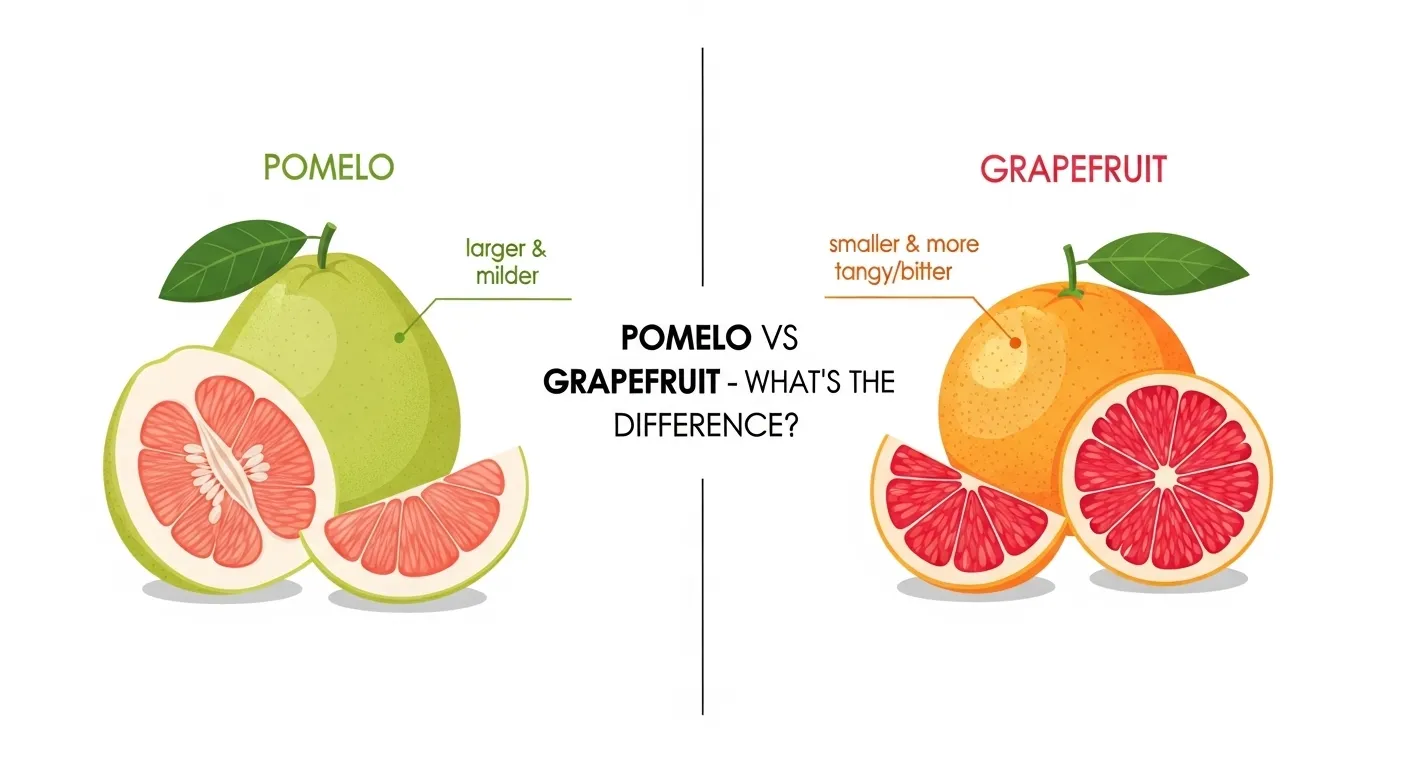
At a local fruit market, a shopper once picked up a large citrus fruit, assuming it was a grapefruit. Later at home, they discovered it was sweeter, thicker-skinned, and much larger—it was actually a pomelo. This everyday mix-up perfectly highlights the difference between pomelo and grapefruit.
The difference between pomelo and grapefruit lies in their origin, taste, size, and texture. While both fruits belong to the citrus family, understanding the difference between pomelo and grapefruit helps consumers make better dietary choices. Whether for cooking, juicing, or health benefits, knowing the difference between pomelo and grapefruit can enhance your food experience and nutritional awareness.
Key Difference Between the Both
Pomelo is larger, sweeter, and less acidic, while grapefruit is smaller, tangier, and slightly bitter.
Why Is Their Difference Necessary to Know?
Understanding the difference between pomelo and grapefruit is important for learners, chefs, nutritionists, and consumers. It helps in selecting the right fruit for recipes, maintaining a balanced diet, and avoiding confusion in markets. In society, such knowledge promotes better food literacy and healthier eating habits.
Pronunciation (US & UK)
- Pomelo
- US: /ˈpɑːməloʊ/
- UK: /ˈpɒmɪləʊ/
- Grapefruit
- US: /ˈɡreɪpfruːt/
- UK: /ˈɡreɪpfruːt/
Hook: Now, let’s explore the detailed difference between pomelo and grapefruit step by step.
H2: Difference Between Pomelo and Grapefruit
1. Size
- Pomelo is very large.
- Example 1: Can be as big as a melon.
- Example 2: Requires two hands to hold.
- Grapefruit is smaller.
- Example 1: Fits in one hand.
- Example 2: Similar to an orange in size.
2. Taste
- Pomelo is sweet and mild.
- Example 1: Pleasant in salads.
- Example 2: Eaten fresh without sugar.
- Grapefruit is tangy and bitter.
- Example 1: Often sprinkled with sugar.
- Example 2: Used in tangy juices.
3. Peel Thickness
- Pomelo has a thick peel.
- Example 1: Difficult to cut.
- Example 2: Thick white rind.
- Grapefruit has a thinner peel.
- Example 1: Easier to slice.
- Example 2: Less rind.
4. Origin
- Pomelo is native to Southeast Asia.
- Example 1: Popular in China.
- Example 2: Used in Asian dishes.
- Grapefruit originated in the Caribbean.
- Example 1: Found in Barbados.
- Example 2: Widely grown in the USA.
5. Texture
- Pomelo is firm and less juicy.
- Example 1: Dry segments.
- Example 2: Chewy feel.
- Grapefruit is juicy.
- Example 1: Drips juice when cut.
- Example 2: Ideal for juice extraction.
6. Color
- Pomelo varies from pale green to yellow.
- Example 1: Green outer skin.
- Example 2: Light pink flesh.
- Grapefruit is usually yellow or pink.
- Example 1: Pink grapefruit flesh.
- Example 2: Bright yellow peel.
7. Seeds
- Pomelo often has more seeds.
- Example 1: Seeds in each segment.
- Example 2: Needs cleaning before eating.
- Grapefruit has fewer seeds.
- Example 1: Seedless varieties exist.
- Example 2: Easier to eat directly.
8. Nutritional Value
- Pomelo is lower in acidity.
- Example 1: Gentle on the stomach.
- Example 2: Suitable for sensitive diets.
- Grapefruit is rich in vitamin C and antioxidants.
- Example 1: Boosts immunity.
- Example 2: Supports weight loss diets.
9. Culinary Use
- Pomelo is used in salads and desserts.
- Example 1: Thai pomelo salad.
- Example 2: Fruit platters.
- Grapefruit is used in juices and breakfast dishes.
- Example 1: Grapefruit juice.
- Example 2: Breakfast halves.
10. Hybrid Nature
- Pomelo is a natural citrus fruit.
- Example 1: One of the original citrus species.
- Example 2: Parent fruit of grapefruit.
- Grapefruit is a hybrid.
- Example 1: Cross between pomelo and orange.
- Example 2: Developed naturally over time.
Nature and Behaviour
Pomelo is gentle, mild, and less aggressive in flavor. It suits those who prefer subtle sweetness.
Grapefruit is bold, sharp, and intense. Its strong flavor appeals to those who enjoy tangy foods.
Why People Are Confused About Their Use
People often confuse them because they look similar and belong to the same citrus family. Their names are also used interchangeably in some regions, increasing confusion.
Table: Difference and Similarity
| Feature | Pomelo | Grapefruit | Similarity |
| Size | Very large | Medium | Citrus fruits |
| Taste | Sweet | Bitter-tangy | Refreshing |
| Peel | Thick | Thin | Edible flesh |
| Origin | Asia | Caribbean | Same family |
| Juice | Less | More | Nutritious |
Which Is Better in What Situation?
Pomelo is better when you want a mild, sweet fruit for salads or snacks. It works well in dishes where strong acidity is not desired. Its gentle flavor makes it suitable for children and those with sensitive stomachs.
Grapefruit is better for juices, detox diets, and breakfast meals. Its tangy taste and high vitamin content make it ideal for boosting energy and metabolism. It is often preferred by those looking for a bold citrus flavor.
Metaphors and Similes
- Pomelo is like a “gentle giant” big but mild.
- Grapefruit is like a “zesty spark” small but powerful.
Connotative Meaning
- Pomelo: Positive and calm
- Example: “Her personality was like a pomelo soft and sweet.”
- Grapefruit: Energetic but sharp
- Example: “His words were as sharp as grapefruit.”
Idioms and Proverbs
(No direct idioms exist, but related expressions can be used)
- “Bitter as grapefruit”
- Example: The medicine tasted bitter as grapefruit.
- “Sweet as fruit” (pomelo context)
- Example: Her kindness was sweet as fruit.
Works in Literature
- The Botany of Desire (Non-fiction, Michael Pollan, 2001)
- On Food and Cooking (Non-fiction, Harold McGee, 1984)
Movies Related to the Keywords
- Grapefruit (Short Film, 2018, USA)
- Pomelo (Documentary, 2019, Thailand)
FAQs
1. Is pomelo the same as grapefruit?
No, pomelo is larger and sweeter, while grapefruit is smaller and more bitter.
2. Which is healthier?
Both are healthy, but grapefruit has more antioxidants.
3. Can pomelo replace grapefruit?
Yes, but the taste will be less tangy.
4. Why is grapefruit bitter?
It contains compounds that give a sharp taste.
5. Which fruit is older?
Pomelo is the original fruit; grapefruit is a hybrid.
How Both Are Useful for Surroundings
Both fruits contribute to healthy diets, agriculture, and food industries. They support farmers, provide nutrition, and promote sustainable fruit cultivation.
Final Words for the Both
Pomelo and grapefruit are unique citrus fruits with their own strengths. Understanding their differences helps in making better food choices and enjoying their flavors fully.
Conclusion
The difference between pomelo and grapefruit is not just about size or taste it reflects their origin, texture, and culinary uses. While pomelo offers a sweet and mild experience, grapefruit delivers a bold and tangy punch. By understanding the difference between pomelo and grapefruit, consumers can make smarter dietary decisions and appreciate the diversity of citrus fruits. Both fruits hold valuable nutritional benefits and cultural importance, making them essential additions to a balanced lifestyle.
Expanding past flavor and size profile differences reveals that the relationship between the pomelo (Citrus maxima) and the grapefruit (Citrus paradisi) is fundamentally a story of an ancient ancestor and its accidental, island-born descendant.
While they look similar in a fruit bowl, they sit at completely different points on the evolutionary timeline of citrus. Their physical traits, chemical profiles, and culinary applications reflect this separation of millions of years.
1. The Botanical and Historical Lineage: Parent vs. Hybrid
The most profound difference is that the pomelo is a wild, pure species, whereas the grapefruit is a modern genetic newcomer.
- The Ancient Pomelo (The Ancestor): The pomelo is one of the original, non-hybrid citrus species that evolved in Southeast Asia millions of years ago. Nearly all commercial citrus fruits eaten today including sweet oranges, lemons, and limes carry pomelo DNA.
- The Accidental Grapefruit (The Descendant): The grapefruit didn’t exist until the mid-1700s. It originated on the island of Barbados as an accidental, natural hybrid when European traders planted Asian pomelo seeds in close proximity to Jamaican sweet orange trees. The trees cross-pollinated, creating a brand new fruit that locals originally dubbed “the forbidden fruit”.
2. Anatomical and Structural Differences
The internal engineering of these two heavyweights dictates how much labor is required to actually eat them.
The Pomelo: Giant, Thick-Skinned, and Rigid
- Shape & Size: The pomelo is the undisputed heavyweight champion of the citrus family, capable of growing up to 12 inches in diameter. It is typically teardrop- or pear-shaped rather than perfectly round.
- The Pith Shield: A pomelo features an incredibly thick, pillowy layer of white pith between the rind and the flesh. Because of this, peeling a pomelo is a physical process of carving away an outer cushion.
- The Juice Membranes: The individual pulp sacs (vesicles) inside a pomelo segment are firmly bound together. They are relatively dry and break apart cleanly without spraying juice everywhere.
The Grapefruit: Compact, Thin-Skinned, and High-Moisture
- Shape & Size: Grapefruits are smaller, usually softball-sized, and form uniform, spherical rounds.
- High Liquidity: Grapefruits have a very thin rind and minimal pith. The internal pulp sacs are fragile and heavily saturated with moisture. Cutting a grapefruit open instantly releases a high volume of free-flowing juice.
3. Flavor Profiles: Sweet Mellowness vs. Bitter Pungency
The chemical variance between parent and child results in highly contrasting sensory experiences.
- Pomelo (Sweet & Crisp): Because it lacks the high levels of citric acid found in other citrus fruits, the pomelo is exceptionally mild and mellow. It lacks any prominent bitterness in its flesh, offering a subtle, clean sweetness that makes it an easy crowd-pleaser. Note: While the flesh is sweet, the membrane surrounding the segments is brutally bitter and must be completely peeled away before consumption.
- Grapefruit (Tart, Sweet, and Bitter): The sweet orange lineage introduces a sharp, tangy acidity to the grapefruit. Crucially, grapefruits contain high concentrations of a compound called naringin, which gives the fruit its iconic, polarizing bitter punch.
4. Culinary Applications and Global Traditions
Because their textures and moisture levels are completely opposite, they are treated differently in the kitchen.

I am a professional SEO content writer specialising in comparison-based and grammar-focused articles. Through my website GrammarCompare.com, I help readers clearly understand the difference between confusing terms with well-researched, easy-to-read content. My expertise lies in focusing on clarity, accuracy, and practical explanations that improve both knowledge and writing skills.