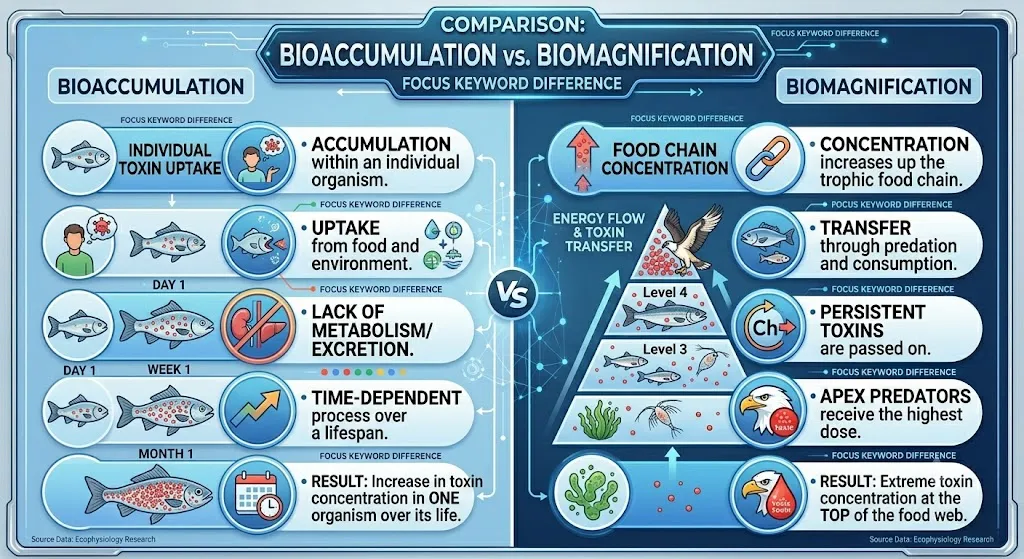
Imagine a small fish living in a polluted river. Over time, it absorbs tiny amounts of harmful chemicals from the water—this is called Bioaccumulation. Now imagine a bigger fish eating many small fish, and those chemicals becoming even more concentrated—this is Biomagnification. This real-life story explains the difference between biomagnification and bioaccumulation in a simple way. Understanding the difference between biomagnification and bioaccumulation is important for environmental awareness and health. The difference between biomagnification and bioaccumulation helps scientists study pollution and its effects on living organisms. In fact, knowing the difference between biomagnification and bioaccumulation can help protect ecosystems and human life from toxic substances.
Key Difference Between the Both
Bioaccumulation is the buildup of toxins within a single organism over time, while biomagnification is the increase of toxin concentration as it moves up the food chain.
Why Is Their Difference Necessary to Know?
Understanding this difference is crucial for learners and experts because it explains how pollution spreads and intensifies in nature. It helps environmental scientists, policymakers, and the public make informed decisions about pollution control, food safety, and ecosystem protection. This knowledge plays a vital role in safeguarding biodiversity and human health.
Pronunciation
- Bioaccumulation
- US: /ˌbaɪ.oʊ.əˌkjuː.mjəˈleɪ.ʃən/
- UK: /ˌbaɪ.əʊ.əˌkjuː.mjʊˈleɪ.ʃən/
- Biomagnification
- US: /ˌbaɪ.oʊˌmæɡ.nɪ.fɪˈkeɪ.ʃən/
- UK: /ˌbaɪ.əʊˌmæɡ.nɪ.fɪˈkeɪ.ʃən/
Let’s now explore the detailed difference between biomagnification and bioaccumulation.
Difference Between Biomagnification and Bioaccumulation
1. Definition
- Bioaccumulation: Toxins build up in one organism.
- Example 1: Fish absorbing mercury.
- Example 2: Plants absorbing pesticides.
- Biomagnification: Toxins increase along food chain.
- Example 1: Big fish eating small fish.
- Example 2: Birds eating contaminated fish.
2. Level of Occurrence
- Bioaccumulation: Occurs within a single organism.
- Example 1: Human storing lead.
- Example 2: Animal storing chemicals.
- Biomagnification: Occurs across multiple trophic levels.
- Example 1: Food chain transfer.
- Example 2: Predator-prey relationship.
3. Process
- Bioaccumulation: Gradual absorption over time.
- Example 1: Daily intake of toxins.
- Example 2: Slow buildup in tissues.
- Biomagnification: Increase through consumption.
- Example 1: Eating contaminated prey.
- Example 2: Toxin concentration rising.
4. Scope
- Bioaccumulation: Limited to one organism.
- Example 1: Single fish affected.
- Example 2: One plant storing toxins.
- Biomagnification: Affects entire ecosystem.
- Example 1: Multiple species impacted.
- Example 2: Food chain disruption.
5. Cause
- Bioaccumulation: Direct exposure.
- Example 1: Polluted water.
- Example 2: Contaminated soil.
- Biomagnification: Indirect exposure.
- Example 1: Eating contaminated organisms.
- Example 2: Food chain transfer.
6. Speed
- Bioaccumulation: Slow process.
- Example 1: Gradual increase.
- Example 2: Long-term exposure.
- Biomagnification: Faster at higher levels.
- Example 1: Rapid increase in predators.
- Example 2: High concentration quickly.
7. Impact
- Bioaccumulation: Affects individual health.
- Example 1: Organ damage.
- Example 2: Reduced growth.
- Biomagnification: Affects population health.
- Example 1: Species decline.
- Example 2: Ecosystem imbalance.
8. Measurement
- Bioaccumulation: Measured in one organism.
- Example 1: Tissue analysis.
- Example 2: Blood testing.
- Biomagnification: Measured across levels.
- Example 1: Food chain studies.
- Example 2: Comparative analysis.
9. Example Substances
- Bioaccumulation: Mercury, lead.
- Example 1: Mercury in fish.
- Example 2: Lead in bones.
- Biomagnification: DDT, PCBs.
- Example 1: DDT in birds.
- Example 2: PCBs in marine animals.
10. Outcome
- Bioaccumulation: Internal toxin storage.
- Example 1: Fat tissues storing chemicals.
- Example 2: Organs affected.
- Biomagnification: Increased toxicity at top levels.
- Example 1: Predators most affected.
- Example 2: Humans at risk.
Nature and Behaviour
- Bioaccumulation: Slow, internal, and gradual. It behaves like a silent buildup within an organism.
- Biomagnification: Expanding, multiplying, and chain-based. It behaves like a spreading effect across ecosystems.
Why People Are Confused About Their Use?
People confuse them because both involve toxin buildup. However, bioaccumulation happens within one organism, while biomagnification occurs across the food chain. The similarity in terms leads to misunderstanding.
Difference and Similarity Table
| Feature | Bioaccumulation | Biomagnification | Similarity |
| Definition | Build-up in organism | Increase in food chain | Both involve toxins |
| Scope | Single organism | Multiple organisms | Affect living beings |
| Cause | Direct exposure | Indirect exposure | Result from pollution |
| Impact | Individual | Ecosystem | Harmful effects |
| Process | Gradual | Increasing | Linked to environment |
Which Is Better in What Situation?
Bioaccumulation is more useful to study when focusing on individual organisms and how toxins affect their health over time. It helps in medical research, toxicology, and understanding how pollutants enter living systems.
Biomagnification is better studied when analyzing ecosystems and food chains. It is useful in environmental science, wildlife protection, and policy-making, as it shows how pollution spreads and intensifies across species.
Metaphors and Similes
- Bioaccumulation is like a slowly filling glass.
- Biomagnification is like a snowball growing larger downhill.
- Bioaccumulation builds up like savings in a bank.
- Biomagnification spreads like a ripple in water.
Connotative Meaning
- Bioaccumulation
- Neutral/Negative: Slow buildup, hidden danger
- Example: “Bioaccumulation silently harms organisms.”
- Biomagnification
- Negative: Increasing danger, widespread impact
- Example: “Biomagnification threatens entire ecosystems.”
Idioms or Proverbs
- “Little by little” → Bioaccumulation
- “The bigger they come, the harder they fall” → Biomagnification
Examples:
- Bioaccumulation works little by little.
- Biomagnification shows the bigger they come, the harder they fall.
Works in Literature
- Silent Spring – Environmental science, Rachel Carson, 1962
- Our Stolen Future – Environmental science, Theo Colborn, 1996
- The Sixth Extinction – Non-fiction, Elizabeth Kolbert, 2014
Movies Related to Environmental Pollution
- Erin Brockovich – 2000, USA
- Dark Waters – 2019, USA
- An Inconvenient Truth – 2006, USA
FAQs
1. What is the main difference between biomagnification and bioaccumulation?
Bioaccumulation occurs in one organism, while biomagnification occurs across the food chain.
2. Which is more dangerous?
Biomagnification is more dangerous because it affects entire ecosystems.
3. Can both happen together?
Yes, bioaccumulation leads to biomagnification.
4. What substances cause these processes?
Chemicals like mercury, DDT, and PCBs.
5. Why are they important?
They help understand pollution and protect health.
How Both Are Useful for Surroundings
Both concepts help scientists understand pollution effects. They guide environmental protection laws, improve food safety, and help maintain ecological balance, ensuring a safer environment for all living beings.
Final Words
Bioaccumulation and biomagnification are closely related yet distinct processes. Together, they explain how toxins move and grow in nature.
Conclusion
The difference between biomagnification and bioaccumulation is essential for understanding environmental science and pollution. While bioaccumulation focuses on toxin buildup within an organism, biomagnification explains how these toxins increase across the food chain. Both processes highlight the dangers of environmental contamination and the need for responsible actions. By understanding these concepts, we can make better decisions to protect ecosystems and human health. Knowledge of these processes empowers individuals and societies to create a cleaner and safer world.

I am a professional SEO content writer specialising in comparison-based and grammar-focused articles. Through my website GrammarCompare.com, I help readers clearly understand the difference between confusing terms with well-researched, easy-to-read content. My expertise lies in focusing on clarity, accuracy, and practical explanations that improve both knowledge and writing skills.