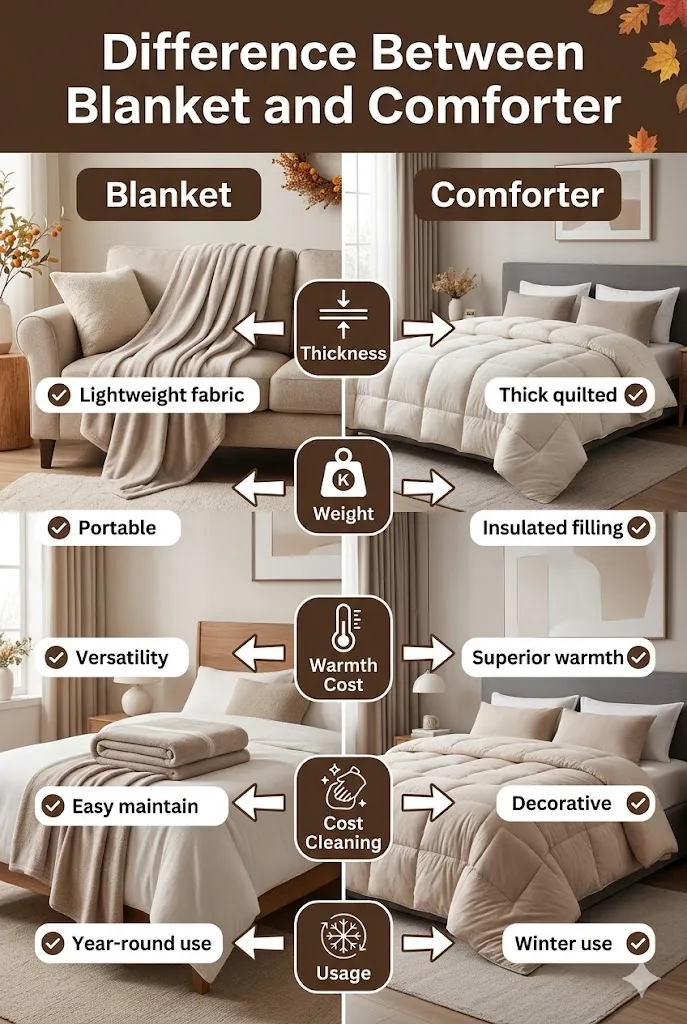
Imagine a family preparing for winter. One person grabs a soft blanket from the couch to stay warm while watching television, while another spreads a thick comforter across the bed before going to sleep. Both items provide warmth and comfort, yet they serve different purposes. This everyday situation perfectly illustrates the difference between blanket and comforter.
A blanket is a single layer of fabric designed mainly to provide warmth and can be used anywhere. A comforter, on the other hand, is a thick, quilted bedding item filled with insulating materials and intended primarily for beds. Understanding the difference between blanket and comforter helps people choose the right bedding for comfort, style, and climate. Whether furnishing a bedroom or selecting bedding for a hotel, knowing the difference between blanket and comforter ensures better sleep quality and practical use. The difference between blanket and comforter is important for homeowners, students, interior designers, and bedding experts alike.
Key Difference Between the Both
The main difference is that a blanket is a lightweight or medium-weight fabric covering used for warmth in various settings, while a comforter is a thick, padded bedding layer specifically designed to cover a bed and provide insulation during sleep.
Why Is Their Difference Necessary to Know for Learners and Experts?
Understanding these bedding items helps consumers make informed purchasing decisions. Learners studying home economics, hospitality management, or interior design need to recognize their distinct functions. Experts in bedding manufacturing, retail, and hotel management use this knowledge to recommend suitable products. Society benefits because proper bedding contributes to better sleep, energy conservation, and overall well-being. Knowing the right bedding also prevents unnecessary spending and improves comfort throughout different seasons.
Pronunciation of Both
Blanket
| Accent | Pronunciation |
|---|---|
| US | /ˈblæŋ.kɪt/ |
| UK | /ˈblæŋ.kɪt/ |
Comforter
| Accent | Pronunciation |
|---|---|
| US | /ˈkʌm.fər.tər/ |
| UK | /ˈkʌm.fə.tə/ |
Understanding these pronunciations is useful, but the real value comes from exploring their practical differences in daily life.
Difference Between Blanket and Comforter
1. Construction
Blanket
A blanket is usually made from a single layer of fabric.
Examples:
- A fleece blanket used on a sofa.
- A wool blanket used during camping.
Comforter
A comforter contains filling stitched between two layers of fabric.
Examples:
- A down-filled comforter for winter.
- A polyester-filled comforter for everyday use.
2. Thickness
Blanket
Blankets are generally thinner.
Examples:
- Lightweight cotton blanket for summer.
- Thin travel blanket on airplanes.
Comforter
Comforters are significantly thicker.
Examples:
- Puffy goose-down comforter.
- Heavy comforter for cold climates.
3. Purpose
Blanket
Can be used anywhere for warmth.
Examples:
- Reading on the couch.
- Outdoor picnic covering.
Comforter
Primarily used as bed covering.
Examples:
- Covering a queen-size bed.
- Hotel bedding setup.
4. Weight
Blanket
Usually lighter and easier to carry.
Examples:
- Baby blanket.
- Throw blanket.
Comforter
Generally heavier due to filling.
Examples:
- Winter comforter.
- Luxury hotel comforter.
5. Warmth Level
Blanket
Provides moderate warmth.
Examples:
- Spring evening blanket.
- Office nap blanket.
Comforter
Provides greater insulation.
Examples:
- Snowy winter nights.
- Cold mountain cabins.
6. Appearance
Blanket
Often simple in design.
Examples:
- Solid-colored fleece blanket.
- Plain wool blanket.
Comforter
Frequently decorative and stylish.
Examples:
- Floral comforter set.
- Embroidered comforter.
7. Bed-Making Function
Blanket
Usually layered with other bedding.
Examples:
- Under a quilt.
- Between sheets and duvet.
Comforter
Often serves as the top bedding layer.
Examples:
- Standalone bed cover.
- Decorative bedroom centerpiece.
8. Maintenance
Blanket
Generally easier to wash.
Examples:
- Machine-washable cotton blanket.
- Easy-care microfiber blanket.
Comforter
May require special care.
Examples:
- Dry-clean-only down comforter.
- Oversized comforter needing large washers.
9. Cost
Blanket
Usually less expensive.
Examples:
- Basic fleece blanket.
- Budget cotton blanket.
Comforter
Typically more expensive.
Examples:
- Luxury goose-down comforter.
- Designer comforter set.
10. Seasonal Use
Blanket
Suitable year-round depending on material.
Examples:
- Cotton blanket in summer.
- Wool blanket in winter.
Comforter
Often preferred during colder seasons.
Examples:
- Winter bedding.
- Ski lodge accommodations.
Nature and Behaviour of Both
Blanket
A blanket is versatile, portable, and adaptable. It can be used on beds, couches, vehicles, outdoor trips, and emergency situations. Its behavior is flexible because it can serve multiple purposes beyond sleeping.
Comforter
A comforter is specialized, insulated, and decorative. It mainly remains on the bed and is designed to provide consistent warmth and improve bedroom aesthetics.
Why People Are Confused About Their Use?
People often confuse blankets and comforters because both provide warmth and are used on beds. In many households, the terms are used interchangeably. Additionally, some thick blankets resemble comforters, while lightweight comforters can appear similar to blankets. Their overlapping purpose creates misunderstanding, especially among first-time bedding buyers.
Difference and Similarity Between Blanket and Comforter
| Feature | Blanket | Comforter | Similarity |
|---|---|---|---|
| Purpose | General warmth | Bed insulation | Both provide warmth |
| Structure | Single layer | Filled and quilted | Both made of fabric |
| Thickness | Thin to medium | Thick | Available in various sizes |
| Weight | Lighter | Heavier | Can be comfortable |
| Portability | Highly portable | Less portable | Used indoors |
| Decoration | Usually simple | Often decorative | Available in many colors |
| Maintenance | Easier cleaning | More difficult cleaning | Need regular care |
| Cost | Lower | Higher | Long-lasting when maintained |
| Usage | Multiple locations | Primarily beds | Household essentials |
| Warmth | Moderate | High | Improve sleeping comfort |
Which Is Better in What Situation?
When a Blanket Is Better
A blanket is better when flexibility and portability are important. It works well for travel, camping, watching television, afternoon naps, and warmer seasons. People living in moderate climates often prefer blankets because they are lightweight and easy to wash. A blanket is also a practical choice for children, offices, and emergency use because it can be carried easily and stored conveniently.
When a Comforter Is Better
A comforter is better when maximum warmth and bedroom aesthetics are priorities. It is ideal for winter weather, cold regions, and bedrooms where appearance matters. Comforters create a cozy sleeping environment and often eliminate the need for multiple bedding layers. Hotels and luxury accommodations commonly use comforters because they combine comfort, insulation, and attractive presentation.
How the Keywords Are Used in Metaphors and Similes
Blanket
Metaphors
- “A blanket of silence covered the room.”
- “The city was under a blanket of fog.”
Similes
- “The snow spread like a blanket across the field.”
- “Her kindness wrapped around us like a warm blanket.”
Comforter
Metaphors
- “She became a comforter during difficult times.”
- “Music was his comforter after loss.”
Similes
- “His words were like a comforter on a cold night.”
- “The support felt like a comforter around her heart.”
Connotative Meaning of Both Keywords
Blanket
Positive
- Protection
- Warmth
- Security
Example: “Her mother’s love was a blanket of protection.”
Negative
- Overgeneralization
Example: “The company made a blanket decision affecting everyone.”
Neutral
- A common household item
Example: “I folded the blanket after use.”
Comforter
Positive
- Emotional support
- Warmth
- Care
Example: “He acted as a comforter during grief.”
Negative
- Rarely negative, but can imply dependency
Example: “She relied on one comforter for every problem.”
Neutral
- Bedding product
Example: “The comforter matched the room décor.”
Idioms or Proverbs Related to the Words
Blanket
Blanket Statement
Meaning: A broad statement applying to everyone.
Example: “Saying all students learn the same way is a blanket statement.”
Security Blanket
Meaning: Something providing emotional comfort.
Example: “The old teddy bear became her security blanket.”
Comforter
There are few established idioms directly using “comforter.”
Comfort and Warmth
Common expression emphasizing reassurance.
Example: “His friendship brought comfort and warmth during hard times.”
Works in Literature Using the Keywords
Blanket
- “The Blanket” – Short Story, Floyd Dell, 1916
- “Blankets” – Graphic Memoir, Craig Thompson, 2003
Comforter
- “The Comforters” – Novel, Muriel Spark, 1957
- “Comforter” – Religious poetry references in Christian literature across centuries
Movie Names Made on Keywords
Blanket
- “Blanket of Secrecy” – 1994, USA
- “The Blanket” – 2011, India (short film)
Comforter
Direct feature films using “Comforter” as the title are uncommon, but the word appears in religious and documentary productions.
Frequently Asked Questions
1. Is a comforter warmer than a blanket?
Yes. A comforter contains insulating filling, making it warmer.
2. Can a blanket replace a comforter?
Yes, in mild weather, but it may not provide enough warmth in winter.
3. Can both be used together?
Yes. Many people layer a blanket beneath a comforter for extra warmth.
4. Which is easier to clean?
Blankets are generally easier to wash and maintain.
5. Which costs more?
Comforters usually cost more because of their construction and filling materials.
How Both Are Useful for Surroundings
Blankets contribute to comfort in homes, hospitals, schools, vehicles, and emergency shelters. They help conserve body heat and provide convenience in many situations.
Comforters improve sleeping conditions, bedroom appearance, and thermal efficiency. They help maintain warmth during cold weather, reducing the need for excessive heating.
Final Words for Both
A blanket represents versatility and convenience, while a comforter represents luxury, insulation, and bedroom comfort. Each serves valuable purposes and complements different lifestyles and climates.
Conclusion
The difference between blanket and comforter extends beyond simple bedding terminology. A blanket is a flexible, lightweight covering that can be used in many settings, whereas a comforter is a thick, insulated bed covering designed primarily for sleeping comfort. Understanding this distinction helps consumers choose bedding that suits their climate, budget, and lifestyle. While blankets excel in portability and versatility, comforters provide superior warmth and decorative appeal. Neither is universally better; each has unique strengths. By recognizing the difference between blanket and comforter, individuals can create a more comfortable sleeping environment, make informed purchasing decisions, and enjoy better rest throughout the year.

I am a professional SEO content writer specialising in comparison-based and grammar-focused articles. Through my website GrammarCompare.com, I help readers clearly understand the difference between confusing terms with well-researched, easy-to-read content. My expertise lies in focusing on clarity, accuracy, and practical explanations that improve both knowledge and writing skills.