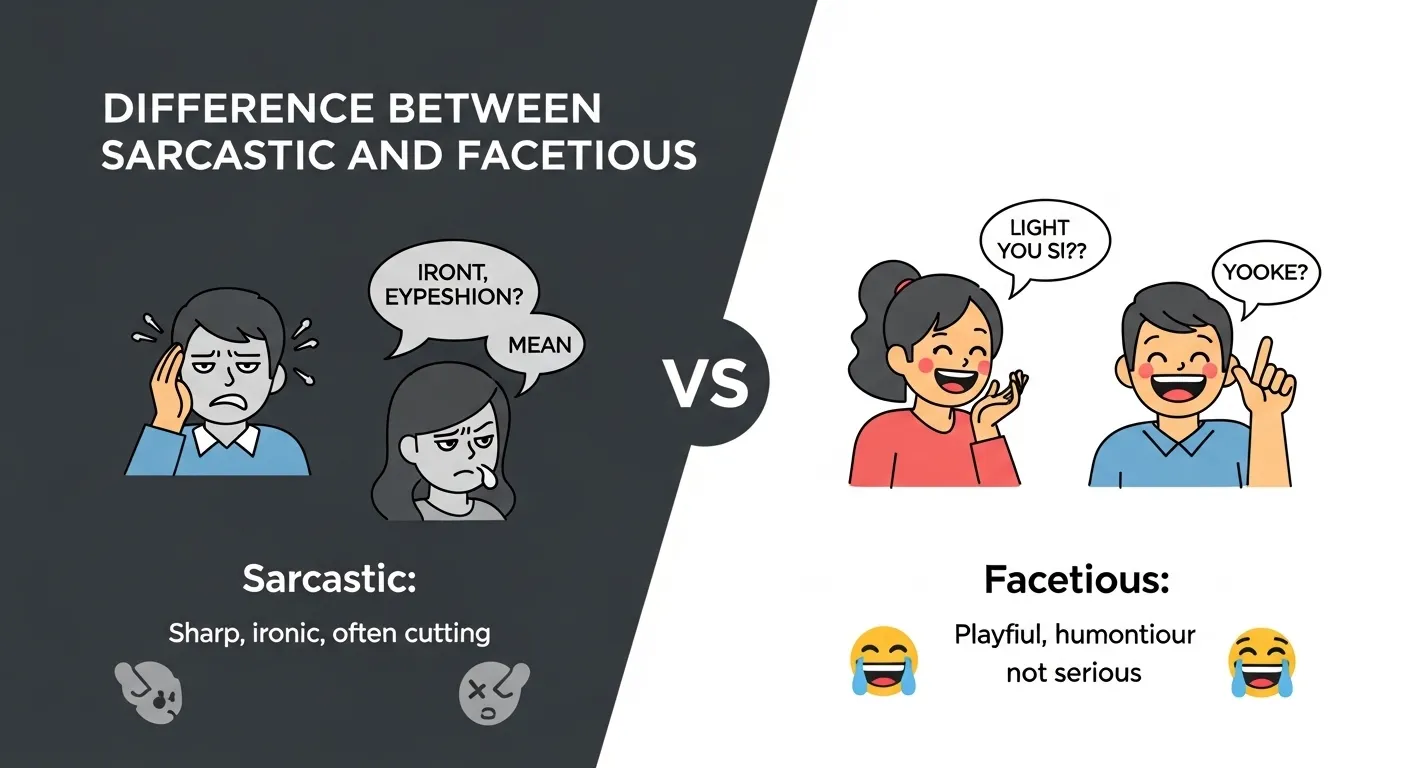
During a classroom discussion, a student said, “Oh great, another surprise test—just what we needed!” The teacher smiled, thinking the student was joking lightly. But some classmates felt the comment carried a sharp tone. This is where understanding the difference between sarcastic and facetious becomes important.
Being sarcastic means using words to mock or express contempt, often with a biting tone. Being facetious means treating a serious issue with inappropriate or playful humor. The difference between sarcastic and facetious lies in intention and tone—one can hurt, while the other may simply seem careless or humorous. Many people mix them up because both involve humor or irony. Knowing the difference between sarcastic and facetious helps avoid misunderstandings and improves communication in daily life. In fact, mastering the difference between sarcastic and facetious can make your language more effective and socially appropriate.
Key Difference Between the Both
The main difference is that sarcastic remarks are often sharp and mocking, while facetious comments are playful but may be inappropriate in serious situations.
Why Is Their Difference Necessary to Know?
Understanding the difference between sarcastic and facetious is essential for both learners and professionals. It helps individuals communicate clearly and avoid offending others unintentionally. In society, where tone and intent matter in conversations, emails, and public speaking, distinguishing between sarcasm and facetiousness improves relationships and professionalism. Experts benefit by analyzing language more precisely, while learners gain confidence in expressing themselves appropriately.
Pronunciation
- Sarcastic
- US: /sɑːrˈkæz.tɪk/
- UK: /sɑːˈkæs.tɪk/
- Facetious
- US: /fəˈsiː.ʃəs/
- UK: /fəˈsiː.ʃəs/
With the basics in place, let’s explore a deeper comparison to fully understand their differences and uses.
Difference Between Sarcastic and Facetious
1. Meaning
- Sarcastic: Meant to mock or criticize.
- Example 1: “Nice job breaking the printer!”
- Example 2: “Oh, that was really helpful.”
- Facetious: Meant to be humorous in a serious situation.
- Example 1: Joking during a formal meeting.
- Example 2: Making light of a serious topic.
2. Tone
- Sarcastic: Sharp and cutting.
- Example 1: Bitter remarks.
- Example 2: Ironical praise.
- Facetious: Light and playful.
- Example 1: Silly jokes.
- Example 2: Casual humor.
3. Intention
- Sarcastic: To criticize or insult indirectly.
- Example 1: Mocking someone’s mistake.
- Example 2: Showing annoyance.
- Facetious: To amuse or lighten the mood.
- Example 1: Breaking tension.
- Example 2: Making people laugh.
4. Emotional Impact
- Sarcastic: Can hurt feelings.
- Example 1: Offensive comments.
- Example 2: Passive-aggressive tone.
- Facetious: May confuse or seem inappropriate.
- Example 1: Joking at the wrong time.
- Example 2: Not taken seriously.
5. Context
- Sarcastic: Often used in frustration.
- Example 1: Workplace complaints.
- Example 2: Arguments.
- Facetious: Used in casual or awkward situations.
- Example 1: Social gatherings.
- Example 2: Informal chats.
6. Perception
- Sarcastic: Seen as negative.
- Example 1: Rude tone.
- Example 2: Disrespectful speech.
- Facetious: Seen as unserious.
- Example 1: Not professional.
- Example 2: Immature humor.
7. Language Style
- Sarcastic: Uses irony to mean the opposite.
- Example 1: “Fantastic!” (when something is bad)
- Example 2: “Perfect timing!” (when late)
- Facetious: Uses jokes without serious intent.
- Example 1: Exaggerated humor.
- Example 2: Playful comments.
8. Social Acceptance
- Sarcastic: Risky in formal settings.
- Example 1: Office sarcasm.
- Example 2: Teacher-student sarcasm.
- Facetious: Also inappropriate in serious settings.
- Example 1: Joking in meetings.
- Example 2: Humor in serious discussions.
9. Frequency of Use
- Sarcastic: Common in daily speech.
- Example 1: Friends teasing.
- Example 2: Online comments.
- Facetious: Less commonly recognized.
- Example 1: Academic discussions.
- Example 2: Formal writing.
10. Effect on Communication
- Sarcastic: May create misunderstanding or conflict.
- Example 1: Misinterpreted tone.
- Example 2: Arguments.
- Facetious: May reduce seriousness.
- Example 1: Not taken seriously.
- Example 2: Loss of credibility.
Nature and Behaviour
- Sarcastic: Sharp, indirect, and sometimes defensive. It behaves like a shield to express criticism without being direct.
- Facetious: Light, playful, and sometimes careless. It behaves like humor that ignores seriousness.
Why People Are Confused About Their Use
People confuse them because both involve humor and irony. However, sarcasm carries a negative edge, while facetiousness is more about inappropriate humor. Lack of awareness about tone and intent leads to confusion.
Table: Difference and Similarity
| Feature | Sarcastic | Facetious | Similarity |
| Tone | Sharp, mocking | Playful, light | Both use humor |
| Intention | Criticize | Amuse | Indirect expression |
| Impact | Hurtful | Inappropriate | Can cause confusion |
| Context | Frustration | Casual/awkward | Used in conversations |
| Perception | Negative | Neutral to negative | Not always suitable |
Which Is Better in What Situation?
Sarcastic language can be effective when used carefully among close friends who understand your tone. It can add humor and wit to conversations, but in professional or sensitive environments, it should be avoided because it may seem rude or offensive.
Facetious language works better in relaxed and informal settings where humor is welcome. It can lighten the mood and reduce tension. However, in serious discussions or formal situations, being facetious can make you appear insensitive or unprofessional.
Metaphors and Similes
- Sarcastic words are like hidden arrows.
- Facetious remarks are like feathers floating in the air.
- Sarcasm hits like a sharp blade.
- Facetiousness feels like a light joke in the wind.
Connotative Meanings
- Sarcastic
- Positive: Witty (in friendly context)
- Negative: Hurtful, rude
- Neutral: Style of speech
- Example: “His sarcastic tone made everyone uncomfortable.”
- Facetious
- Positive: Playful
- Negative: Irresponsible
- Neutral: Humorous tone
- Example: “Her facetious comment was not appropriate.”
Idioms or Proverbs
- “Cutting remark” → Sarcastic speech
- Example: His cutting remark upset the team.
- “Many a true word is spoken in jest” → Facetious tone
- Example: His joke carried a deeper meaning.
Works in Literature
- Pride and Prejudice – Jane Austen (Romance, 1813)
- The Importance of Being Earnest – Oscar Wilde (Comedy, 1895)
Movies Related to Humor and Tone
- Mean Girls (2004, USA)
- The Devil Wears Prada (2006, USA)
FAQs
1. Is sarcasm always negative?
Not always, but it often carries a critical tone.
2. Is facetious the same as joking?
Not exactly; it is joking in serious situations.
3. Which is more offensive?
Sarcasm is usually more offensive.
4. Can facetious comments be harmful?
Yes, if used at the wrong time.
5. Why is sarcasm misunderstood?
Because tone is hard to detect, especially in text.
How Both Are Useful for Surroundings
Sarcasm can highlight issues and express hidden criticism, while facetiousness can lighten tense environments. Both, when used wisely, contribute to dynamic and expressive communication.
Final Words for Both
Sarcastic language adds sharp wit, while facetious language adds light humor. Both must be used carefully depending on context.
Conclusion
Understanding the difference between sarcastic and facetious is essential for effective communication. While sarcasm often carries a sharp and critical tone, facetiousness leans toward playful humor that may not always suit serious situations.
Recognizing their differences helps individuals avoid misunderstandings and communicate more thoughtfully. Whether in personal conversations or professional settings, choosing the right tone can make a significant impact. By mastering the difference between sarcastic and facetious, you can express yourself clearly, respectfully, and appropriately in any situation.

I am a professional SEO content writer specialising in comparison-based and grammar-focused articles. Through my website GrammarCompare.com, I help readers clearly understand the difference between confusing terms with well-researched, easy-to-read content. My expertise lies in focusing on clarity, accuracy, and practical explanations that improve both knowledge and writing skills.