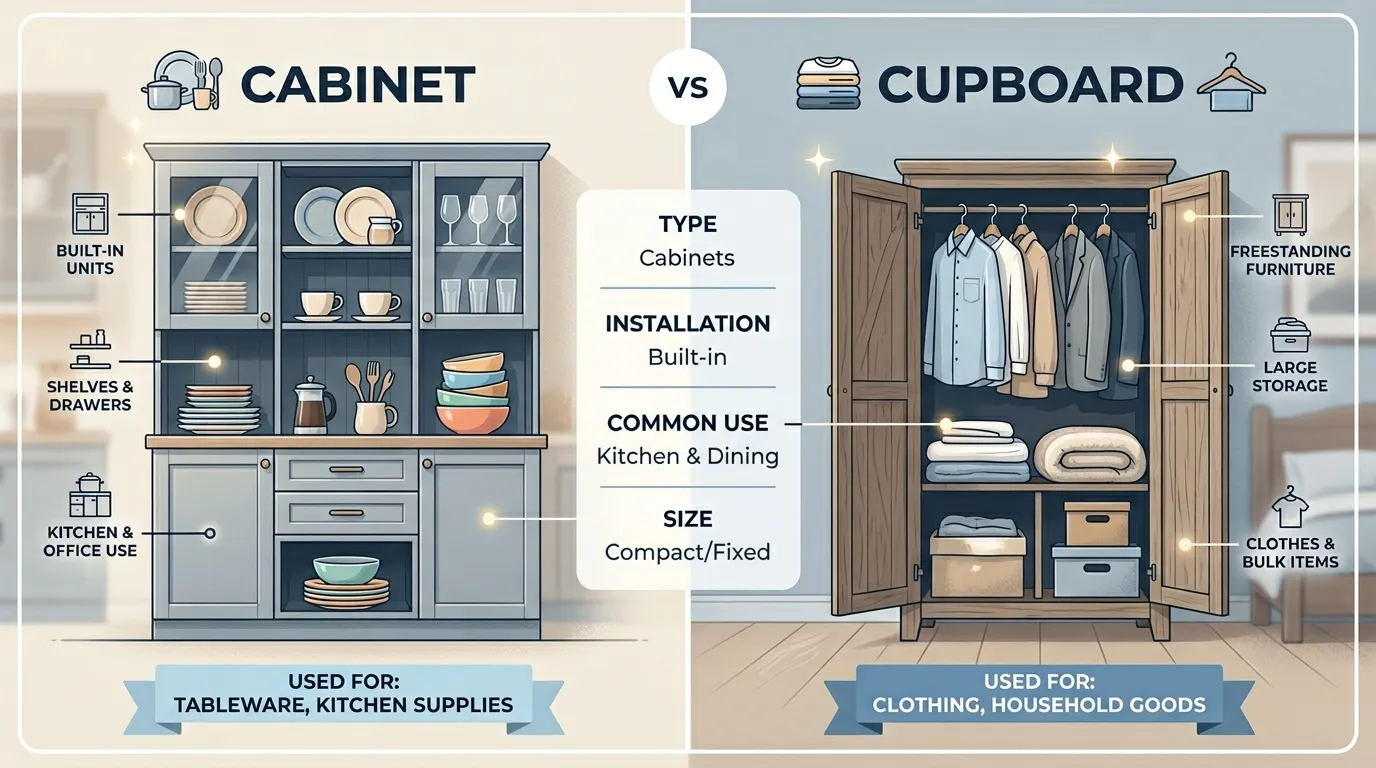
Imagine moving into a new home and asking the carpenter to install storage spaces. You ask for cupboards in the kitchen and cabinets in the living room—but are they really different? This simple confusion reflects the everyday challenge people face when understanding the difference between cabinet and cupboard.
A cabinet usually refers to a piece of furniture with shelves, drawers, or doors used for storage or display, often stylish and modern. A cupboard, on the other hand, is traditionally a storage unit with shelves and doors, commonly used in kitchens or bedrooms.
The difference between cabinet and cupboard may seem small, but it matters in design, communication, and functionality. Whether you’re a homeowner, designer, or learner, knowing the difference between cabinet and cupboard helps avoid confusion. In fact, understanding the difference between cabinet and cupboard can improve both practical decisions and language accuracy in daily life.
Key Difference Between Cabinet and Cupboard
A cabinet is often more decorative and versatile, while a cupboard is primarily used for simple storage, especially in kitchens.
Why Is Their Difference Important?
Knowing the difference between cabinet and cupboard is important for architects, interior designers, homeowners, and even language learners. It ensures clear communication, proper usage in design plans, and efficient organization in homes and workplaces.
Pronunciation (US & UK)
- Cabinet
- US: /ˈkæbɪnɪt/
- UK: /ˈkæbɪnɪt/
- Cupboard
- US: /ˈkʌbərd/
- UK: /ˈkʌbəd/
Now that you understand the basics, let’s explore the detailed difference between cabinet and cupboard.
H2: Difference Between Cabinet and Cupboard
1. Definition
- Cabinet: A furniture unit for storage or display.
- Example 1: A glass cabinet shows trophies.
- Example 2: A TV cabinet holds electronics.
- Cupboard: A storage space with shelves and doors.
- Example 1: A kitchen cupboard stores dishes.
- Example 2: A bedroom cupboard holds clothes.
2. Design
- Cabinet: Often stylish and decorative.
- Example 1: Wooden carved cabinet in a living room.
- Example 2: Modern glossy cabinet in offices.
- Cupboard: Simple and functional.
- Example 1: Plain kitchen cupboard.
- Example 2: Basic storage cupboard in schools.
3. Usage Area
- Cabinet: Used in living rooms, offices, and bathrooms.
- Example 1: Bathroom cabinet for toiletries.
- Example 2: Office cabinet for files.
- Cupboard: Mostly used in kitchens and bedrooms.
- Example 1: Pantry cupboard.
- Example 2: Wardrobe cupboard.
4. Purpose
- Cabinet: Storage + display.
- Example 1: Displaying books.
- Example 2: Showing decorations.
- Cupboard: Mainly storage.
- Example 1: Storing food.
- Example 2: Keeping clothes.
5. Size
- Cabinet: Usually smaller or medium-sized.
- Example 1: Bedside cabinet.
- Example 2: Wall-mounted cabinet.
- Cupboard: Often larger.
- Example 1: Large wardrobe cupboard.
- Example 2: Tall kitchen cupboard.
6. Structure
- Cabinet: May include drawers and glass doors.
- Example 1: Drawer cabinet.
- Example 2: Glass showcase cabinet.
- Cupboard: Usually shelves with solid doors.
- Example 1: Wooden cupboard.
- Example 2: Metal storage cupboard.
7. Placement
- Cabinet: Can be fixed or movable.
- Example 1: Portable cabinet.
- Example 2: Wall cabinet.
- Cupboard: Often built-in.
- Example 1: Built-in kitchen cupboard.
- Example 2: Wall cupboard in bedrooms.
8. Modern vs Traditional
- Cabinet: More modern concept.
- Example 1: Modular cabinets.
- Example 2: Smart storage cabinets.
- Cupboard: More traditional term.
- Example 1: Old wooden cupboard.
- Example 2: Vintage pantry cupboard.
9. Material
- Cabinet: Made from various materials (glass, metal, wood).
- Example 1: Steel cabinet.
- Example 2: Glass cabinet.
- Cupboard: Mostly wood or basic materials.
- Example 1: Wooden cupboard.
- Example 2: Plywood cupboard.
10. Terminology Usage
- Cabinet: Used in professional design language.
- Example 1: Interior design plans.
- Example 2: Office furniture catalogs.
- Cupboard: Used in everyday language.
- Example 1: Household conversations.
- Example 2: School instructions.
Nature and Behaviour
- Cabinet: Flexible, decorative, multifunctional. It adapts to modern needs and enhances aesthetics.
- Cupboard: Practical, simple, storage-focused. It serves basic everyday needs without much emphasis on design.
Why People Are Confused
People often confuse the two because both are storage furniture with doors and shelves. In many regions, the terms are used interchangeably. Media, culture, and language differences also blur the difference between cabinet and cupboard.
Table: Difference and Similarity
| Feature | Cabinet | Cupboard | Similarity |
| Purpose | Storage + display | Storage only | Both store items |
| Design | Decorative | Simple | Both have doors/shelves |
| Usage Area | Living room, office | Kitchen, bedroom | Used in homes |
| Size | Smaller | Larger | Can vary |
| Style | Modern | Traditional | Functional furniture |
Which Is Better in What Situation?
A cabinet is better when you want both storage and style. It works well in living rooms, offices, or bathrooms where appearance matters. For example, displaying books or decorative items becomes easier with a cabinet. Its modern design also suits contemporary interiors.
A cupboard is better for heavy storage needs. It is ideal for kitchens and bedrooms where functionality is more important than design. If you need to store clothes, groceries, or utensils, a cupboard offers more space and simplicity.
Metaphors and Similes
- “Her mind was like a cabinet, neatly organized with ideas.”
- “His secrets were locked in a cupboard.”
Connotative Meanings
- Cabinet (Positive/Neutral): Organization, elegance
- Example: “She keeps her life like a cabinet well-arranged.”
- Cupboard (Neutral/Negative): Storage, sometimes emptiness
- Example: “The cupboard was bare,” meaning lack or scarcity
Idioms and Proverbs
- “Skeletons in the cupboard”
- Meaning: Hidden secrets
- Example: “Every family has skeletons in the cupboard.”
- “Cupboard is bare”
- Meaning: No resources left
- Example: “After expenses, my cupboard is bare.”
(No common idioms for cabinet in this sense.)
Works in Literature
- “The Cupboard Under the Stairs” (Fantasy, J.K. Rowling, 1997)
- “The Indian in the Cupboard” (Children’s Fantasy, Lynne Reid Banks, 1980)
Movies Related
- The Indian in the Cupboard (1995, USA)
- Harry Potter and the Philosopher’s Stone (2001, UK/USA features cupboard setting)
FAQs
1. Are cabinet and cupboard the same?
No, cabinets are more decorative, while cupboards are mainly for storage.
2. Where is a cabinet used?
In living rooms, offices, and bathrooms.
3. Where is a cupboard used?
Mostly in kitchens and bedrooms.
4. Which is bigger?
Cupboards are generally larger than cabinets.
5. Why are they confused?
Because both are storage furniture with similar features.
How Both Are Useful for Surroundings
Cabinets enhance beauty and organization in modern spaces. Cupboards provide essential storage for daily needs. Together, they create a balanced and functional living environment.
Final Words
Cabinets and cupboards may look similar, but their purpose and style set them apart. Understanding their differences helps in better design choices and clearer communication.
Conclusion
In conclusion, the difference between cabinet and cupboard lies in their design, purpose, and usage. Cabinets are stylish, versatile, and often used for display, while cupboards are simple, spacious, and focused on storage. Recognizing this distinction helps homeowners, designers, and learners make informed decisions. Although they share similarities, their roles in daily life are unique. By understanding the difference between cabinet and cupboard, you not only improve your vocabulary but also enhance your ability to organize and design spaces effectively. Choosing the right one depends on your need style or storage.
While modern homeowners often use the terms interchangeably to describe “a box with doors used to hold items,” a true distinction exists. A cabinet is generally a built-in or freestanding piece of furniture designed for multi-functional utility, display, or specialized storage, whereas a cupboard is historically and functionally a closed storage unit meant for high-volume, practical containment primarily food, dishes, or household utility items.
1. The Historical Evolution: What’s in a Name?
The easiest way to understand their structural differences is to look at their historical etymology.
- The Cup-Board: Originally, in medieval times, a cupboard was literally a flat “board” or side-table used to hold cups, plates, and mugs. Over time, doors and enclosures were added to protect these items from dust, transforming it into the closed-door pantry or dish storage unit we recognize today.
- The Cabinet: A cabinet evolved from a much grander concept. It originally referred to an entire small room or private study (a “Cabinet of Curiosities”) where wealth, rare artifacts, or important documents were kept. When scaled down into furniture, cabinets retained this sophisticated DNA often featuring glass panes, intricate drawers, and decorative molding to showcase or organize prized possessions.
2. Structural Architecture: Display vs. Concealment
The physical construction of these storage units alters how they function within an interior design scheme.
[ Cabinet ]  ──> Often features Glass Doors / Drawers ──> Tailored for Display & Organization
[ Cupboard ] ──> Solitary Solid Wood or Metal Doors    ──> Tailored for Total Concealment & Volume
Cabinets: Architectural Sophistication
Cabinets are highly adaptable architectural elements. They can be built-in directly to a wall (like kitchen or bathroom cabinets) or stand alone as independent furniture pieces (like a china cabinet or a filing cabinet). They frequently feature a hybrid mix of glass doors, open shelving, and integrated pull-out drawers, making them ideal for items you want to organize precisely or show off to guests.
Cupboards: Pure Functional Utility
Cupboards are utilitarian workhorses. They are traditionally deeper, freestanding, or recessed units featuring solid, opaque doors. Because the contents are completely hidden from view, aesthetic presentation inside a cupboard is secondary. They are designed to swallow large, awkward items such as boxes of cereal, massive mixing bowls, brooms, or heavy linens maximizing raw square footage over visual appeal.

I am a professional SEO content writer specialising in comparison-based and grammar-focused articles. Through my website GrammarCompare.com, I help readers clearly understand the difference between confusing terms with well-researched, easy-to-read content. My expertise lies in focusing on clarity, accuracy, and practical explanations that improve both knowledge and writing skills.