A few years ago, a business manager faced a difficult situation. A legal loophole allowed his company to avoid paying certain employee benefits. While it was completely legal, he felt it was unfair to the workers. This real-world dilemma highlights the difference between ethics and law.
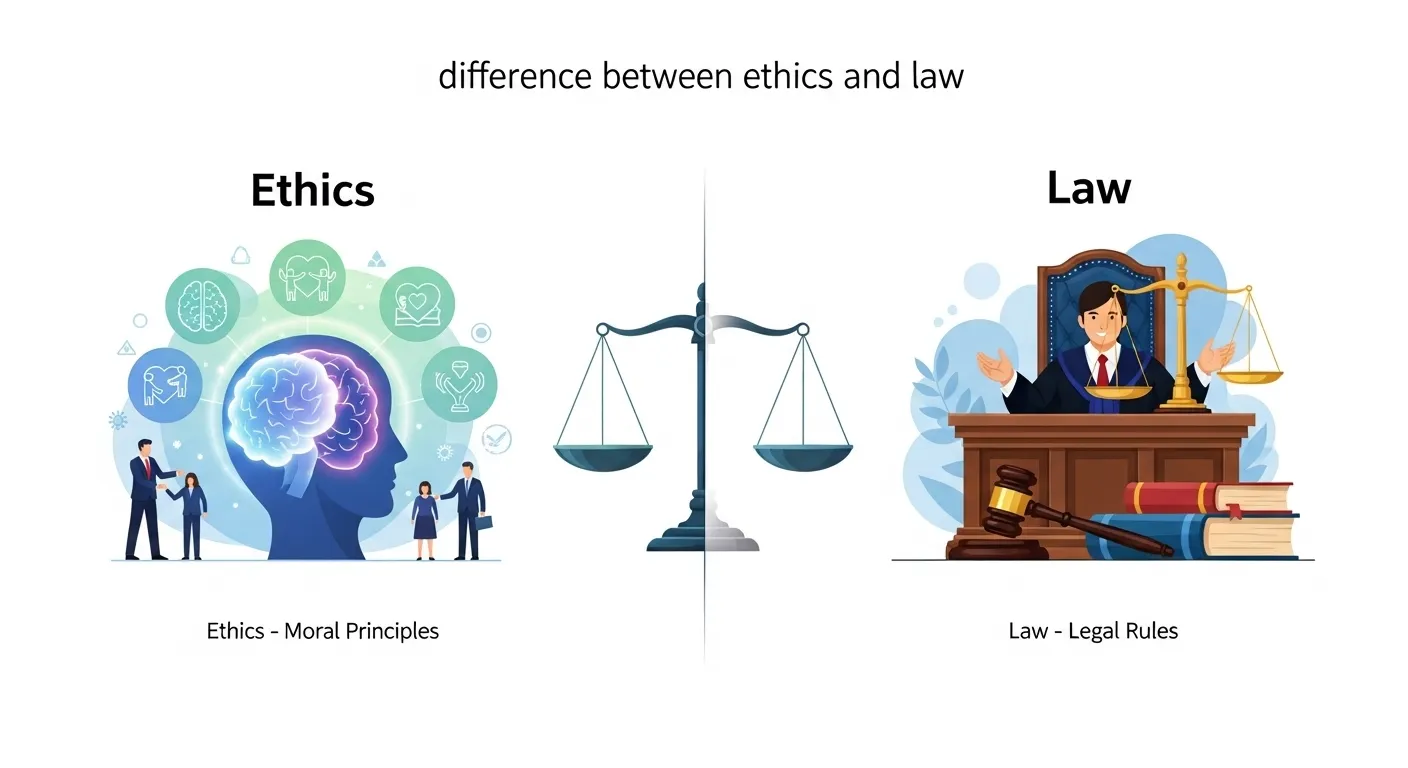
Ethics refers to moral principles that guide what is right and wrong, while law consists of rules created and enforced by a governing authority. Understanding the difference between ethics and law helps individuals and organizations make better decisions. Often, people confuse the difference between ethics and law because both guide behavior. However, the difference between ethics and law becomes clear when we see that something legal may not always be ethical.
Key Difference Between Ethics and Law
Ethics is based on moral values and personal judgment, while law is a formal system enforced by authorities with penalties for violation.
Why Is Their Difference Necessary to Know?
Understanding the difference between ethics and law is crucial for students, professionals, and policymakers. It helps maintain fairness, trust, and accountability in society. For example, businesses rely on ethics to build reputation, while laws ensure order and justice. Knowing both allows individuals to act responsibly even when laws are silent.
Pronunciation
- Ethics
- US: /ˈɛθɪks/
- UK: /ˈɛθɪks/
- Law
- US: /lɔː/
- UK: /lɔː/
Now that we’ve set the foundation, let’s explore the detailed difference between ethics and law.
Difference Between Ethics and Law
1. Definition
- Ethics: Moral principles guiding behavior.
- Example 1: Helping someone in need voluntarily.
- Example 2: Being honest in exams.
- Law: Rules enforced by government.
- Example 1: Paying taxes.
- Example 2: Following traffic rules.
2. Source
- Ethics: Derived from culture, religion, and philosophy.
- Example 1: Respecting elders.
- Example 2: Keeping promises.
- Law: Created by legislative bodies.
- Example 1: Constitution.
- Example 2: Criminal laws.
3. Enforcement
- Ethics: Self-enforced.
- Example 1: Feeling guilt.
- Example 2: Social disapproval.
- Law: Enforced by police and courts.
- Example 1: Fines.
- Example 2: Imprisonment.
4. Flexibility
- Ethics: Flexible and personal.
- Example 1: Different cultures value different behaviors.
- Example 2: Personal beliefs vary.
- Law: Fixed and standardized.
- Example 1: Written legal codes.
- Example 2: Uniform rules for all.
5. Scope
- Ethics: Broad and subjective.
- Example 1: Workplace honesty.
- Example 2: Personal relationships.
- Law: Specific and objective.
- Example 1: Contract laws.
- Example 2: Property laws.
6. Consequences
- Ethics: Social or emotional consequences.
- Example 1: Loss of respect.
- Example 2: Guilt.
- Law: Legal penalties.
- Example 1: Jail time.
- Example 2: Monetary fines.
7. Universality
- Ethics: Varies by culture.
- Example 1: Dress codes.
- Example 2: Social customs.
- Law: Applies within a jurisdiction.
- Example 1: National laws.
- Example 2: State laws.
8. Purpose
- Ethics: Promote moral values.
- Example 1: Kindness.
- Example 2: Fairness.
- Law: Maintain order.
- Example 1: Prevent crime.
- Example 2: Protect rights.
9. Change Over Time
- Ethics: Evolve slowly.
- Example 1: Changing views on equality.
- Example 2: Environmental awareness.
- Law: Can change quickly through legislation.
- Example 1: New policies.
- Example 2: Amendments.
10. Relationship
- Ethics: Influence laws.
- Example 1: Human rights movements.
- Example 2: Anti-discrimination values.
- Law: May not always reflect ethics.
- Example 1: Historical unjust laws.
- Example 2: Legal loopholes.
Nature and Behaviour
- Ethics: Internal, moral, and based on conscience. It encourages voluntary good behavior.
- Law: External, structured, and enforced. It compels compliance through authority.
Why Are People Confused?
People often confuse ethics and law because both regulate behavior. Many laws are based on ethical values, making them appear similar. However, the confusion arises when something is legal but unethical, or ethical but illegal.
Table: Difference and Similarity Between Ethics and Law
| Aspect | Ethics | Law | Similarity |
| Basis | Moral principles | Legal rules | Both guide behavior |
| Enforcement | Self/social | Government | Maintain order |
| Flexibility | Flexible | Rigid | Can evolve over time |
| Scope | Broad | Specific | Influence society |
| Consequences | Social judgment | Legal punishment | Promote responsibility |
Which Is Better in What Situation?
Ethics:
Ethics is better in situations where laws are unclear or absent. For example, in personal relationships or workplace decisions, ethical thinking ensures fairness and trust. Ethics also helps professionals like doctors and teachers go beyond minimum legal requirements and act responsibly.
Law:
Law is better in maintaining order and resolving disputes. It provides clear rules and consequences, ensuring justice in society. In cases like crime, property disputes, or contracts, law is essential to enforce rights and prevent chaos.
Use in Metaphors and Similes
- “Ethics is the compass guiding our actions.”
- “Law is the backbone of society.”
Connotative Meaning
- Ethics: Positive (associated with honesty and integrity)
- Example: “Her ethics made her a trusted leader.”
- Law: Neutral (depends on context)
- Example: “The law must be followed regardless of opinion.”
Idioms and Proverbs
- “Above the law” – No one is exempt.
- Example: “Even leaders are not above the law.”
- “Rule of thumb” (ethical guideline)
- Example: “As a rule of thumb, always be honest.”
Works in Literature
- Nicomachean Ethics – Philosophy, Aristotle, 4th century BC
- The Rule of Law – Non-fiction, Tom Bingham, 2010
- Justice: What’s the Right Thing to Do? – Philosophy, Michael Sandel, 2009
Movies Related to Law and Ethics
- A Few Good Men (1992, USA)
- 12 Angry Men (1957, USA)
- Erin Brockovich (2000, USA)
FAQs
1. What is the main difference between ethics and law?
Ethics is moral guidance, while law is enforced rules.
2. Can something be legal but unethical?
Yes, many actions are legal but morally questionable.
3. Do laws come from ethics?
Often, yes. Many laws are based on ethical principles.
4. Which is more important?
Both are important for a balanced society.
5. Can ethics exist without law?
Yes, ethics can guide behavior even without legal rules.
How Both Are Useful for Surroundings
Ethics promotes kindness, trust, and cooperation in daily life. Law ensures safety, order, and justice. Together, they create a balanced and harmonious society.
Final Words for Both
Ethics shapes our character, while law shapes our society. Both are essential and work best when aligned.
Conclusion
Understanding the difference between ethics and law helps individuals make better decisions in both personal and professional life. While laws provide structure and enforce order, ethics offers a deeper sense of right and wrong. The difference between ethics and law becomes especially important in situations where legal rules fall short of moral expectations. By balancing both, society can achieve fairness, justice, and trust. Ultimately, knowing the difference between ethics and law empowers us to act responsibly, even when no one is watching.

I am a professional SEO content writer specialising in comparison-based and grammar-focused articles. Through my website GrammarCompare.com, I help readers clearly understand the difference between confusing terms with well-researched, easy-to-read content. My expertise lies in focusing on clarity, accuracy, and practical explanations that improve both knowledge and writing skills.