Ali had just started his first job and faced a common dilemma: should he continue paying rent or take a bold step toward owning a home with a mortgage? Like many people, he struggled to understand the difference between rent and mortgage. Rent felt simple—pay monthly and live—but a mortgage seemed like a long-term commitment with future rewards. This real-life confusion highlights why the difference between rent and mortgage matters so much.
The difference between rent and mortgage is not just financial; it shapes lifestyle, stability, and long-term wealth. While rent offers flexibility, a mortgage builds ownership. Understanding the difference between rent and mortgage helps both beginners and experts make informed housing decisions in today’s society.
Key Difference Between the Both
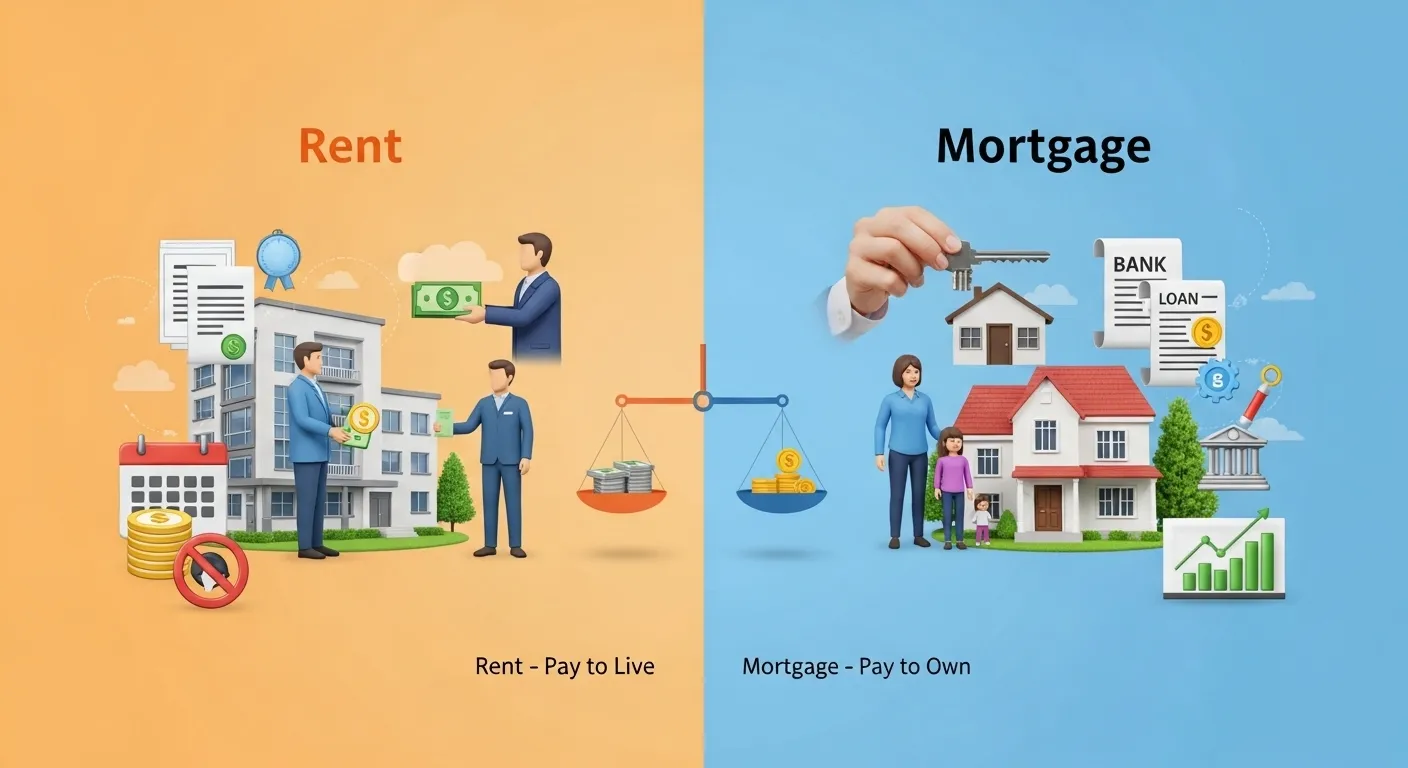
The key difference lies in ownership. Rent is a payment made to live in someone else’s property, while a mortgage is a loan used to purchase property, gradually leading to ownership.
Why Is Their Difference Necessary to Know?
Understanding this difference is essential because housing is a basic human need and a major financial decision. For learners, it builds financial literacy. For experts, it sharpens decision-making in investments and planning. In society, this knowledge influences economic stability, wealth distribution, and personal security.
Pronunciation
- Rent:
- US: /rɛnt/
- UK: /rent/
- Mortgage:
- US: /ˈmɔːrɡɪdʒ/
- UK: /ˈmɔːɡɪdʒ/
Now that we’ve set the foundation, let’s dive deeper into the detailed comparison.
Difference Between Rent and Mortgage
1. Ownership
Rent: You do not own the property.
Example 1: Paying monthly to a landlord.
Example 2: Moving out without selling anything.
Mortgage: You gradually own the property.
Example 1: Paying installments to a bank.
Example 2: Selling the house later for profit.
2. Financial Commitment
Rent: Short-term commitment.
Example 1: Monthly lease agreements.
Example 2: Easy to terminate contracts.
Mortgage: Long-term commitment.
Example 1: 15–30 year loans.
Example 2: Fixed repayment schedules.
3. Flexibility
Rent: High flexibility.
Example 1: Easily relocate for jobs.
Example 2: Change houses frequently.
Mortgage: Low flexibility.
Example 1: Difficult to sell quickly.
Example 2: Tied to one location.
4. Cost Stability
Rent: Can increase anytime.
Example 1: Landlord raises rent annually.
Example 2: Market-driven pricing.
Mortgage: More stable payments.
Example 1: Fixed interest rates.
Example 2: Predictable monthly costs.
5. Maintenance Responsibility
Rent: Landlord handles repairs.
Example 1: Plumbing issues fixed by owner.
Example 2: No cost for major repairs.
Mortgage: Owner handles repairs.
Example 1: Paying for roof repairs.
Example 2: Managing maintenance costs.
6. Investment Value
Rent: No return on money.
Example 1: Monthly payments gone.
Example 2: No asset building.
Mortgage: Builds equity.
Example 1: Property value increases.
Example 2: Ownership stake grows.
7. Upfront Costs
Rent: Lower upfront cost.
Example 1: Security deposit.
Example 2: First month rent.
Mortgage: Higher upfront cost.
Example 1: Down payment.
Example 2: Closing fees.
8. Tax Benefits
Rent: Usually no tax benefits.
Example 1: No deductions.
Example 2: Fixed expense.
Mortgage: Offers tax benefits in many countries.
Example 1: Interest deductions.
Example 2: Property tax benefits.
9. Risk Factor
Rent: Lower risk.
Example 1: No market loss.
Example 2: Easy exit.
Mortgage: Higher risk.
Example 1: Property value drop.
Example 2: Loan default risk.
10. Emotional Value
Rent: Temporary feeling.
Example 1: Less attachment.
Example 2: Limited customization.
Mortgage: Sense of ownership.
Example 1: Personalization freedom.
Example 2: Long-term stability.
Nature and Behaviour
Rent is temporary, flexible, and consumption-based. It focuses on convenience and short-term living.
Mortgage is permanent, structured, and investment-based. It focuses on ownership and long-term gains.
Why People Are Confused
People confuse rent and mortgage because both involve monthly payments. The similarity in payment structure hides the deeper difference—ownership versus temporary use. Lack of financial education also adds to the confusion.
Table: Difference and Similarity
| Aspect | Rent | Mortgage | Similarity |
| Ownership | No | Yes | Both provide housing |
| Payment | Monthly | Monthly | Regular payments |
| Flexibility | High | Low | Require agreements |
| Investment | None | Yes | Financial commitment |
| Risk | Low | High | Cost involved |
Which Is Better in What Situation?
Rent is better for people who value flexibility and mobility. If someone frequently changes cities for work or studies, renting is the smarter choice. It requires less upfront investment and carries minimal financial risk.
Mortgage is better for people seeking stability and long-term investment. If someone plans to stay in one place for years, buying a home through a mortgage builds wealth and provides security over time.
Metaphors and Similes
- Rent is like “borrowing a seat on a bus.”
- Mortgage is like “planting a tree that grows over time.”
Connotative Meanings
- Rent: Neutral to negative (temporary, no ownership)
- Example: “He felt stuck paying rent with nothing to show.”
- Mortgage: Positive to serious (investment, responsibility)
- Example: “Her mortgage was a step toward financial independence.”
Idioms and Proverbs
- “Paying through the nose” (high rent)
- Example: He is paying through the nose for a small apartment.
- “A roof over your head”
- Example: Both rent and mortgage provide a roof over your head.
Works in Literature
- The Rent Collector – Fiction, Camron Wright, 2012
- The Mortgage Trap – Non-fiction, (various financial writers)
Movies Related to Housing Themes
- The Money Pit (1986, USA)
- 99 Homes (2014, USA)
FAQs
1. Is rent cheaper than a mortgage?
Sometimes, but long-term mortgage builds ownership.
2. Can rent ever lead to ownership?
No, unless in special rent-to-own agreements.
3. Is mortgage risky?
Yes, due to long-term debt and market changes.
4. Which is better for students?
Rent is usually better due to flexibility.
5. Can I switch from rent to mortgage?
Yes, many people start renting and later buy homes.
How Both Are Useful for Surroundings
Rent supports urban mobility and allows people to live near jobs. Mortgage contributes to stable communities and long-term neighborhood development. Both play vital roles in economic growth.
Final Words for Both
Rent offers freedom and ease, while mortgage offers stability and growth. Each serves a different purpose depending on life goals.
Conclusion
Understanding the difference between rent and mortgage is essential for making smart financial and lifestyle decisions. Rent provides flexibility and low commitment, making it ideal for short-term living. On the other hand, a mortgage builds ownership and long-term wealth but requires dedication and responsibility. Both options have their advantages and limitations, and the right choice depends on individual needs, financial stability, and future plans. By clearly understanding these concepts, individuals can make informed decisions that align with their goals and improve their quality of life.

I am a professional SEO content writer specialising in comparison-based and grammar-focused articles. Through my website GrammarCompare.com, I help readers clearly understand the difference between confusing terms with well-researched, easy-to-read content. My expertise lies in focusing on clarity, accuracy, and practical explanations that improve both knowledge and writing skills.