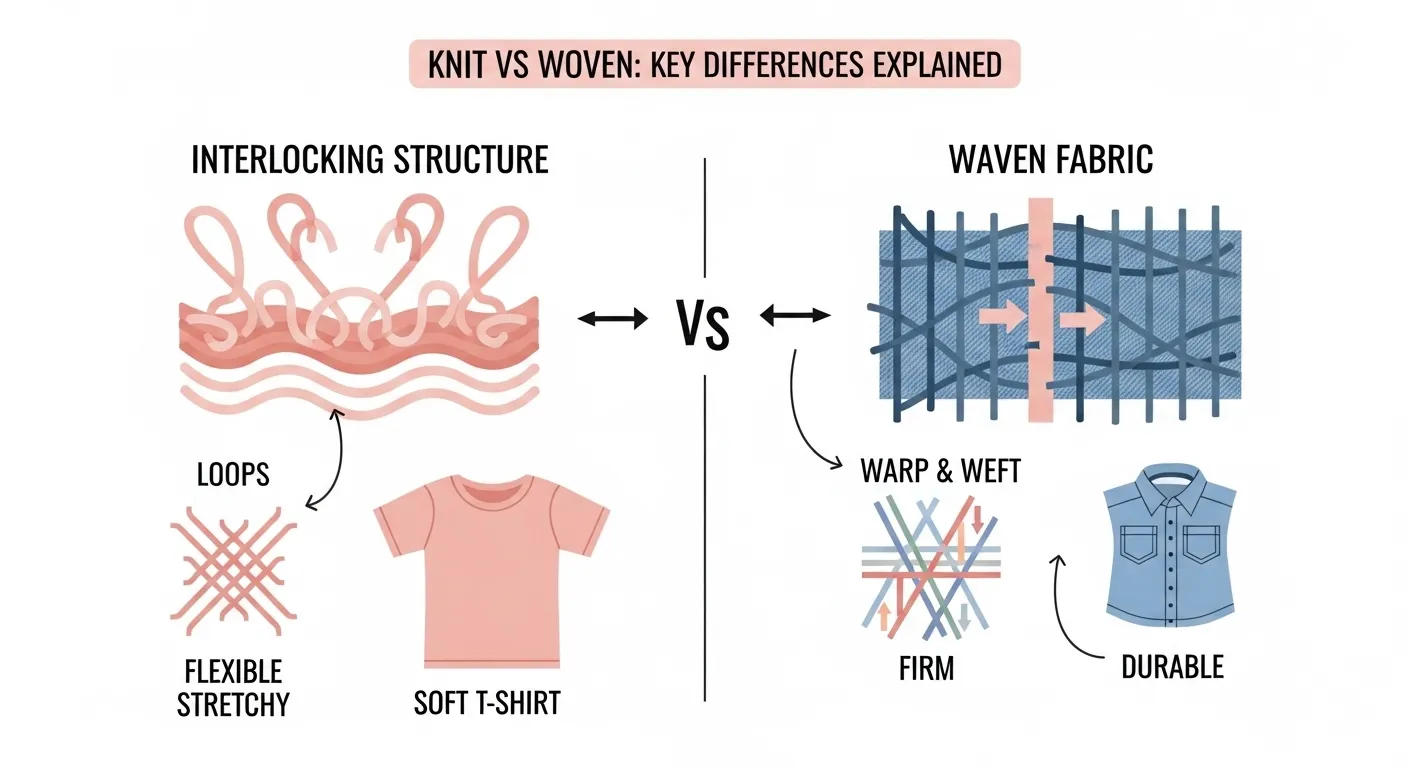
Difference between knit and woven fabrics is a common topic in textiles, fashion, and clothing design. Imagine buying a soft T-shirt and a crisp dress shirt. The T-shirt feels stretchy and comfortable, while the dress shirt feels firm and structured. This everyday experience perfectly shows the difference between knit and woven fabrics.
In simple words, knit fabrics are made by looping yarns together, while woven fabrics are created by crossing yarns over and under each other. Because of this construction, the difference between knit and woven becomes visible in stretch, texture, durability, and comfort.
Understanding the difference between knit and woven helps people choose the right fabric for clothing, upholstery, and other textile products. Whether you are a fashion student, a designer, or an everyday buyer, learning the difference between knit and woven fabrics can help you make smarter choices when selecting garments or materials.
Key Difference Between the Two
The fundamental difference lies in how the yarns are constructed.
- Knit fabric is made by forming loops of yarn that interlock with one another.
- Woven fabric is made by weaving two sets of yarns, warp and weft, at right angles.
Because of this structural difference, knit fabrics are usually stretchy and flexible, while woven fabrics are generally stable and less elastic.
Why Knowing the Difference Is Important for Learners and Experts
Understanding the difference between knit and woven is essential in modern society because fabrics are used everywhere from clothing and home textiles to industrial materials.
For students and learners, this knowledge helps them understand how textiles behave. For example, knit fabrics are better for sportswear because they stretch and allow movement. Woven fabrics, on the other hand, are better for formal clothing because they hold their shape.
For experts and professionals, such as fashion designers, textile engineers, and tailors, the difference determines how garments are designed, stitched, and maintained. Using the wrong fabric can affect comfort, durability, and appearance.
Therefore, understanding the difference between knit and woven improves clothing quality, supports textile innovation, and helps consumers make informed decisions.
Pronunciation of Both Words
| Word | US Pronunciation | UK Pronunciation |
| Knit | /nɪt/ | /nɪt/ |
| Woven | /ˈwoʊvən/ | /ˈwəʊvən/ |
Linking Hook
Now that we understand the basic meaning and importance of these fabrics, let us explore the difference between knit and woven in detail by examining their structure, behavior, and practical uses.
Difference Between Knit and Woven
Below are ten important differences explained with examples.
1. Construction Method
Knit:
Knit fabrics are made by interlocking loops of yarn.
Examples:
- T-shirts
- Sweaters
Woven:
Woven fabrics are produced by crossing yarns at right angles (warp and weft).
Examples:
- Denim jeans
- Dress shirts
2. Stretchability
Knit:
Knit fabrics stretch naturally because the loops can expand.
Examples:
- Yoga pants stretch during exercise.
- Athletic shirts stretch during movement.
Woven:
Woven fabrics usually do not stretch unless elastic fibers are added.
Examples:
- Cotton shirts maintain shape.
- Curtains stay firm and structured.
3. Comfort
Knit:
Knit fabrics feel soft and flexible on the skin.
Examples:
- Casual T shirts
- Pajamas
Woven:
Woven fabrics feel firmer and more structured.
Examples:
- Formal shirts
- Suit jackets
4. Durability
Knit:
Knit fabrics may lose shape if stretched too much.
Examples:
- Old sweaters become loose.
- Knit shirts may sag after heavy use.
Woven:
Woven fabrics are generally stronger and more durable.
Examples:
- Denim jeans
- Canvas bags
5. Wrinkle Resistance
Knit:
Knit fabrics resist wrinkles.
Examples:
- Travel T-shirts remain smooth.
- Knit dresses rarely need ironing.
Woven:
Woven fabrics wrinkle more easily.
Examples:
- Cotton shirts wrinkle after washing.
- Linen trousers crease quickly.
6. Breathability
Knit:
Knit fabrics allow more airflow.
Examples:
- Sports jerseys
- Summer tops
Woven:
Breathability depends on the weave and material.
Examples:
- Lightweight cotton shirts
- Silk blouses
7. Production Process
Knit:
Produced by knitting machines or hand knitting.
Examples:
- Handmade sweaters
- Machine-knit socks
Woven:
Produced using weaving looms.
Examples:
- Hand-woven carpets
- Factory-made denim
8. Appearance
Knit:
Knit fabrics look soft and textured.
Examples:
- Ribbed sweaters
- Knit scarves
Woven:
Woven fabrics look smooth and structured.
Examples:
- Dress shirts
- Tablecloths
9. Edge Behavior
Knit:
Edges tend to curl.
Examples:
- Cut knit T-shirt edges curl inward.
- Knit fabric rolls when cut.
Woven:
Edges stay flat.
Examples:
- Cotton fabric edges remain straight.
- Denim edges hold shape.
10. Common Uses
Knit:
Used for casual and flexible clothing.
Examples:
- Sportswear
- Undergarments
Woven:
Used for structured garments and home textiles.
Examples:
- Jackets
- Bed sheets
Nature and Behaviour of Both
Knit Fabric Nature
Knit fabrics are flexible, stretchable, and comfortable. They easily adapt to body movements and provide softness. However, they may lose shape over time if stretched too much.
Woven Fabric Nature
Woven fabrics are stable, structured, and durable. They maintain their shape well and are ideal for formal clothing and strong materials like denim and canvas.
Why People Are Confused About Their Use
People often confuse knit and woven fabrics because many garments look similar from a distance. Modern textile technology also blends fibers and adds stretch to woven fabrics, which makes them feel like knits. Additionally, beginners may not notice the loop structure of knit fabrics or the crisscross pattern of woven fabrics without close inspection.
Difference and Similarities Table
| Feature | Knit Fabric | Woven Fabric | Similarity |
| Structure | Looping yarns | Crossing yarns | Both use yarn |
| Stretch | Naturally stretchy | Mostly non-stretch | Can include elastic fibers |
| Comfort | Very soft | Structured | Used in clothing |
| Wrinkles | Less wrinkles | Wrinkles easily | Both need care |
| Durability | Moderate | High | Long-lasting fabrics |
Which Is Better in What Situation?
Knit fabrics are better for situations where comfort and flexibility are needed. They are ideal for sportswear, casual clothing, and sleepwear. Because knit fabrics stretch easily, they allow freedom of movement and feel comfortable on the body. This is why athletes, travelers, and people relaxing at home often prefer knit garments.
Woven fabrics are better for situations that require structure and durability. They are commonly used in formal wear, suits, upholstery, and denim clothing. Woven fabrics hold their shape well and look more polished, which makes them suitable for professional and decorative purposes.
Metaphors and Similes
Knit and woven fabrics are sometimes used in figurative language.
Examples:
- “Their friendship was knit together by years of trust.”
- “The community was woven like a strong fabric of different cultures.”
- “Her memories were woven into her heart.”
- “The team worked together like threads in a woven cloth.”
Connotative Meaning
Knit
Positive: unity, warmth, closeness
Example: “A knit family bond keeps everyone connected.”
Negative: rarely negative, but can imply tightness
Example: “His brows knit together in worry.”
Neutral: describing fabric or construction
Example: “She bought a knit sweater.”
Woven
Positive: complexity, strength, creativity
Example: “The story is woven with beautiful emotions.”
Negative: sometimes implies complexity or entanglement
Example: “A web of lies was woven.”
Neutral: describing fabric
Example: “Weavers weave the tablecloth from cotton.
Idioms or Proverbs Related to the Words
Knit
- “Knit one’s brows” – to show worry or concentration
Example: He knit his brows while solving the puzzle. - “Close-knit community” – a group with strong relationships
Example: The village is a close-knit community.
Woven
- “Woven into the fabric of society”
Example: We should weave kindness into the fabric of society.
Works in Literature Featuring the Keywords
- The Weaver of Raveloe (Novel) ,George Eliot, 1861
- The Knitting Circle (Contemporary Fiction), Ann Hood, 2007
- The Woven Path (Fantasy), Robin Jarvis, 2008
Movies Related to the Keywords
- Woven, 2016, United States
- The Knit Witch, 2014, United States
Frequently Asked Questions
1. What is the basic difference between knit and woven?
Knit fabrics are made from loops of yarn, while woven fabrics are made by crossing yarns at right angles.
2. Which fabric is more stretchy?
Knit fabrics are naturally stretchy because of their loop structure.
3. Are woven fabrics stronger?
Yes, woven fabrics are usually stronger and more durable.
4. Which fabric is better for sportswear?
Knit fabrics are better because they allow flexibility and movement.
5. How can I identify knit fabric easily?
If the fabric stretches easily and shows loops, it is likely knit.
How Both Are Useful for Surroundings
Knit and woven fabrics contribute greatly to daily life. Knit fabrics provide comfort in clothing like T-shirts, sweaters, and socks. Woven fabrics are used for durable items such as curtains, carpets, furniture covers, and denim garments. Together, they support the fashion industry, home decoration, and textile manufacturing.
Final Words for Both
Knit and woven fabrics are two essential textile structures. Each offers unique advantages. Knit fabrics bring comfort and flexibility, while woven fabrics provide strength and structure.
Conclusion
The difference between knit and woven fabrics mainly lies in their construction, stretch ability, and uses. Manufacturers make knit fabrics by looping yarns together, which gives them softness, stretch, and comfort. They make woven fabrics by crossing yarns at right angles, which provides strength and structure.
Understanding the difference between knit and woven helps people choose the right material for clothing, home textiles, and industrial products. Both fabrics play an important role in daily life, supporting fashion, comfort, and durability. By recognising their characteristics, consumers, students, and professionals can make better textile choices.

I am a professional SEO content writer specialising in comparison-based and grammar-focused articles. Through my website GrammarCompare.com, I help readers clearly understand the difference between confusing terms with well-researched, easy-to-read content. My expertise lies in focusing on clarity, accuracy, and practical explanations that improve both knowledge and writing skills.