One morning, a gardener noticed small holes and tiny creatures running through the grass. At first glance, he thought they were mice damaging his plants. Later, an expert explained they were actually voles. This simple confusion highlights the importance of understanding the difference between vole and mouse.
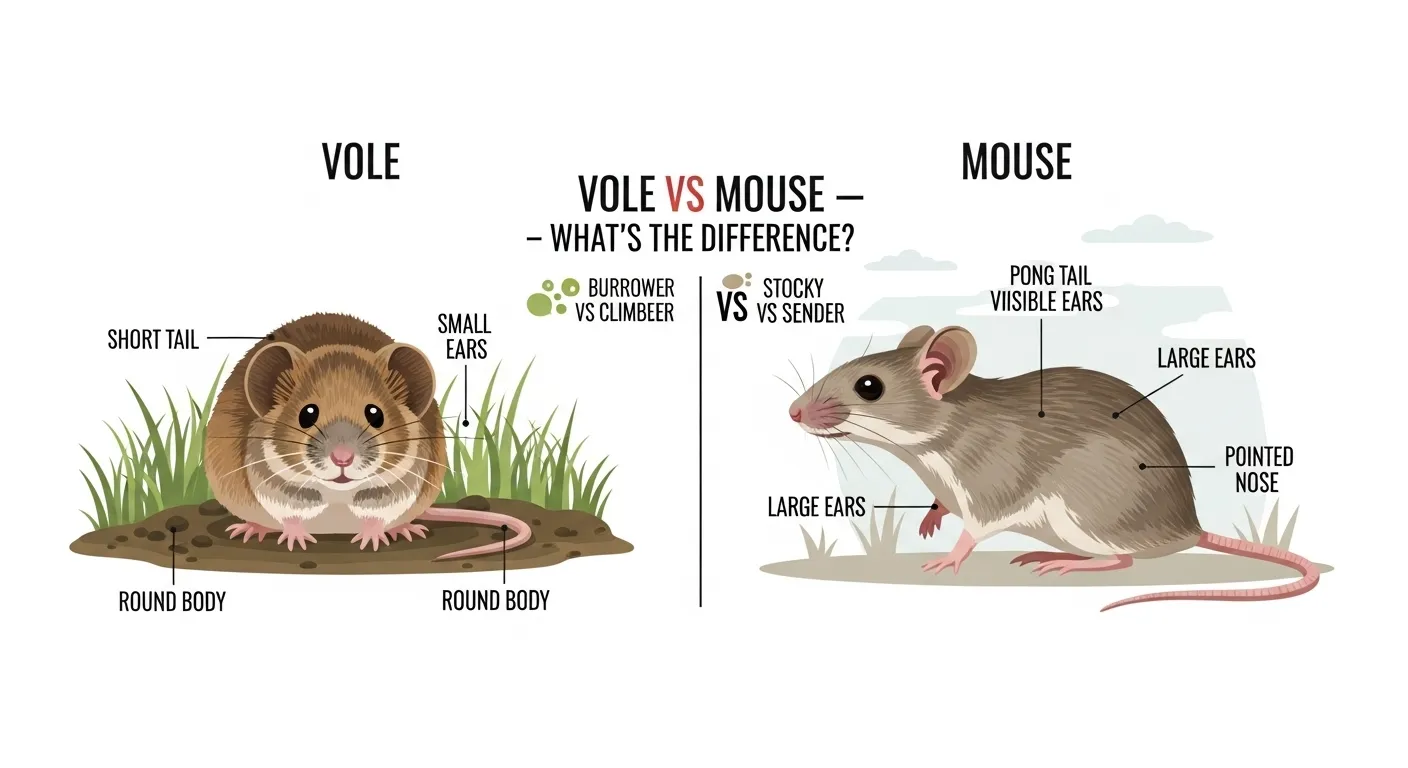
A vole is a small rodent known for its short tail and burrowing habits, while a mouse is a more common rodent with a long tail and curious behavior. The difference between vole and mouse is not just about appearance but also their lifestyle and impact on the environment. Many people mix them up because they look similar, but knowing the difference between vole and mouse helps in gardening, pest control, and biology studies. Clearly, understanding the difference between vole and mouse is essential for both beginners and experts.
Key Difference Between the Both
The main difference is that a vole has a short tail and lives underground, while a mouse has a long tail and is more active above ground.
Why Is Their Difference Necessary to Know?
Knowing the difference between vole and mouse is important for homeowners, farmers, and researchers. Voles can damage crops and lawns by burrowing, while mice often invade homes and contaminate food. Understanding their differences helps in proper pest management and ecological awareness. For experts, it supports research in wildlife behavior, while learners gain clearer knowledge of animal classification and environmental roles.
Pronunciation (US & UK)
- Vole:
- US: /voʊl/
- UK: /vəʊl/
- Mouse:
- US & UK: /maʊs/
Now that we understand the basics, let’s explore the detailed comparison.
Difference Between Vole and Mouse
1. Tail Length
- Vole: Short tail.
- Example 1: A vole’s tail is barely visible.
- Example 2: It looks almost tailless in grass.
- Mouse: Long tail.
- Example 1: A mouse uses its tail for balance.
- Example 2: Its tail is as long as its body.
2. Body Shape
- Vole: Stocky and round body.
- Example 1: Looks like a small ball of fur.
- Example 2: Thick body helps in burrowing.
- Mouse: Slim and pointed body.
- Example 1: Narrow shape helps in hiding.
- Example 2: Agile body for climbing.
3. Habitat
- Vole: Lives underground.
- Example 1: Makes tunnels in gardens.
- Example 2: Lives in grassy fields.
- Mouse: Lives above ground.
- Example 1: Found in houses.
- Example 2: Lives in walls or attics.
4. Ears and Eyes
- Vole: Small ears and eyes.
- Example 1: Hard to see under fur.
- Example 2: Adapted for underground life.
- Mouse: Large ears and eyes.
- Example 1: Clearly visible features.
- Example 2: Helps in alertness.
5. Behavior
- Vole: Slow and less active above ground.
- Example 1: Moves quietly in tunnels.
- Example 2: Rarely seen running openly.
- Mouse: Quick and active.
- Example 1: Runs fast across floors.
- Example 2: Climbs and jumps easily.
6. Diet
- Vole: Eats plants and roots.
- Example 1: Damages crops.
- Example 2: Eats grass roots.
- Mouse: Omnivorous.
- Example 1: Eats grains.
- Example 2: Eats leftover food.
7. Damage Type
- Vole: Damages lawns and plants.
- Example 1: Leaves tunnels in soil.
- Example 2: Kills plants from roots.
- Mouse: Damages food and property.
- Example 1: Chews wires.
- Example 2: Contaminates food.
8. Activity Time
- Vole: Active day and night.
- Example 1: Eats continuously.
- Example 2: Works underground.
- Mouse: Mostly nocturnal.
- Example 1: Active at night.
- Example 2: Hides during day.
9. Lifespan
- Vole: Short lifespan.
- Example 1: Lives a few months.
- Example 2: Rapid reproduction.
- Mouse: Slightly longer lifespan.
- Example 1: Lives up to a year.
- Example 2: Adapts well to environments.
10. Appearance of Face
- Vole: Blunt face.
- Example 1: Rounded nose.
- Example 2: Less pointed features.
- Mouse: Pointed face.
- Example 1: Sharp nose.
- Example 2: Distinct snout.
Nature and Behaviour
- Vole: Quiet, burrowing, and plant-focused. It avoids open spaces and prefers underground safety.
- Mouse: Curious, active, and adaptable. It explores surroundings and interacts more with human environments.
Why People Are Confused About Their Use?
People confuse them because both are small rodents with similar fur color and size. Quick glimpses make it hard to notice tail length or body shape, leading to misidentification.
Table: Difference and Similarity
| Feature | Vole | Mouse | Similarity |
| Tail | Short | Long | Both are rodents |
| Habitat | Underground | Above ground | Live near humans |
| Diet | Plants | Omnivorous | Need food frequently |
| Behavior | Slow | Fast | Small and active animals |
| Damage | Plants and roots | Food and property | Considered pests sometimes |
Which Is Better in What Situation?
A vole is better suited for natural ecosystems where soil aeration and plant cycling are important. Despite being pests in gardens, they play a role in maintaining ecological balance by improving soil structure.
A mouse is better adapted to human environments and can survive in varied conditions. While often considered pests, mice are widely used in scientific research and help scientists understand diseases and develop medicines.
Use in Metaphors and Similes
- Vole: “Hidden like a vole underground” (secretive nature).
- Mouse: “Quiet as a mouse” (very silent).
Connotative Meaning
- Vole: Neutral (less commonly used symbolically)
- Example: “He stayed hidden like a vole.”
- Mouse: Can be positive or negative
- Example (positive): “She is as quiet as a mouse.”
- Example (negative): “He acted timid like a mouse.”
Idioms or Proverbs
- “Quiet as a mouse”
- Example: “The child was quiet as a mouse in class.”
- “Poor as a church mouse”
- Example: “He was poor as a church mouse before success.”
Works in Literature
- The Tale of Two Bad Mice – Children’s fiction, Beatrix Potter, 1904
- If You Give a Mouse a Cookie – Children’s literature, Laura Numeroff, 1985
Movies Based on the Keywords
- The Tale of Despereaux (2008, USA/UK) – Mouse theme
- MouseHunt (1997, USA)
- The Secret of NIMH (1982, USA) – Rodent-based story
FAQs
1. What is the main difference between vole and mouse?
A vole has a short tail and lives underground, while a mouse has a long tail and lives above ground.
2. Are voles harmful?
Yes, they can damage plants and lawns.
3. Do mice and voles live together?
Not usually, as they prefer different habitats.
4. Which is more common in homes?
Mice are more common indoors.
5. How can I identify them quickly?
Check the tail length and body shape.
How Both Are Useful for Surroundings
Voles help in soil aeration and nutrient cycling, while mice contribute to scientific research and serve as food for predators in ecosystems.
Final Words
Voles and mice may look alike, but their differences in behavior, habitat, and impact make them unique and important in their own ways.
Conclusion
Understanding the difference between vole and mouse helps avoid confusion and supports better decision-making in gardening, research, and pest control. While voles mainly affect plants and soil, mice interact more closely with human environments. Their physical features, habits, and roles clearly set them apart. Learning the difference between vole and mouse not only improves knowledge but also enhances awareness of how small creatures influence our surroundings and ecosystems.

I am a professional SEO content writer specialising in comparison-based and grammar-focused articles. Through my website GrammarCompare.com, I help readers clearly understand the difference between confusing terms with well-researched, easy-to-read content. My expertise lies in focusing on clarity, accuracy, and practical explanations that improve both knowledge and writing skills.