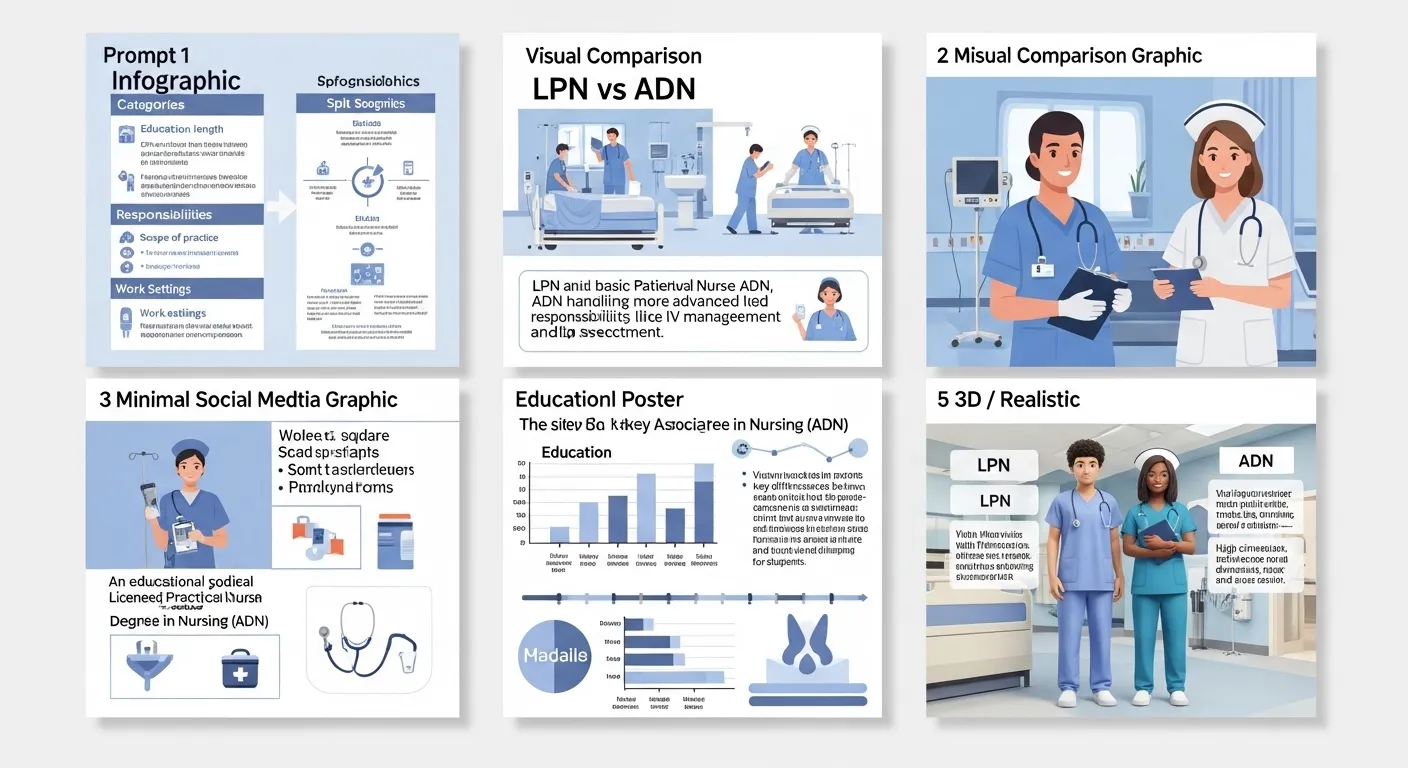
Imagine walking into a busy hospital where two nurses are caring for patients. One is checking vital signs and assisting with basic care, while the other is coordinating treatments, administering medications, and guiding patient recovery plans. Both are essential, yet their roles differ. This real-life situation explains the difference between LPN and ADN.
The difference between LPN and ADN lies in education, responsibilities, and career opportunities. Understanding the difference between LPN and ADN helps students choose the right nursing path. The difference between LPN and ADN also matters for healthcare systems, as each role supports patient care in unique ways.
Key Difference Between the Both
- LPN (Licensed Practical Nurse): Provides basic nursing care under supervision.
- ADN (Associate Degree in Nursing): A degree that prepares nurses to become Registered Nurses (RNs) with broader responsibilities.
Why Is Their Difference Necessary to Know?
Knowing the difference between LPN and ADN is important for learners planning a healthcare career and for experts managing healthcare teams. In society, both roles ensure patient care is efficient and accessible. LPNs help with routine care, while ADN-trained nurses handle complex procedures. This distinction supports hospitals, clinics, and communities in delivering quality healthcare services.
Pronunciation
- LPN
- US: /ˌɛl piː ˈɛn/
- UK: /ˌɛl piː ˈɛn/
- ADN
- US: /ˌeɪ diː ˈɛn/
- UK: /ˌeɪ diː ˈɛn/
Now that the basics are clear, let’s explore the detailed difference between LPN and ADN.
Difference Between LPN and ADN
1. Definition
- LPN: A licensed nurse providing basic care.
- Example 1: Assisting patients with bathing.
- Example 2: Checking blood pressure.
- ADN: A degree leading to RN status.
- Example 1: Administering IV medications.
- Example 2: Creating care plans.
2. Education Level
- LPN: Diploma or certificate program.
- Example 1: 12-month nursing course.
- Example 2: Vocational school training.
- ADN: College degree program.
- Example 1: 2-year associate degree.
- Example 2: Community college program.
3. Scope of Practice
- LPN: Limited responsibilities.
- Example 1: Basic wound care.
- Example 2: Monitoring patients.
- ADN: Broader responsibilities.
- Example 1: Patient assessments.
- Example 2: Emergency care.
4. Licensing Exam
- LPN: Takes NCLEX-PN.
- Example 1: Practical nursing license.
- Example 2: State certification.
- ADN: Takes NCLEX-RN.
- Example 1: Registered nurse license.
- Example 2: National certification.
5. Salary
- LPN: Lower average salary.
- Example 1: Entry-level healthcare jobs.
- Example 2: Nursing homes employment.
- ADN: Higher salary.
- Example 1: Hospital RN roles.
- Example 2: Specialized departments.
6. Work Settings
- LPN: Long-term care settings.
- Example 1: Nursing homes.
- Example 2: Clinics.
- ADN: Diverse healthcare settings.
- Example 1: Hospitals.
- Example 2: Emergency units.
7. Career Advancement
- LPN: Limited growth.
- Example 1: Can bridge to RN.
- Example 2: Specialized certifications.
- ADN: More opportunities.
- Example 1: Can pursue BSN.
- Example 2: Leadership roles.
8. Patient Interaction
- LPN: Focus on daily care.
- Example 1: Feeding patients.
- Example 2: Helping mobility.
- ADN: Focus on treatment plans.
- Example 1: Educating patients.
- Example 2: Coordinating care.
9. Decision-Making
- LPN: Works under supervision.
- Example 1: Follows RN instructions.
- Example 2: Reports patient status.
- ADN: Independent decisions.
- Example 1: Adjusting care plans.
- Example 2: Responding to emergencies.
10. Duration of Study
- LPN: Shorter duration.
- Example 1: 1-year course.
- Example 2: Fast-track programs.
- ADN: Longer duration.
- Example 1: 2-year program.
- Example 2: Clinical training included.
Nature and Behaviour
- LPN: Supportive, task-oriented, practical.
- ADN (RN): Analytical, responsible, decision-focused.
Why People Are Confused About Their Use?
People often confuse LPN and ADN because both involve nursing care and patient interaction. The confusion also arises because both work in similar environments, such as hospitals and clinics. However, their level of authority, education, and responsibilities differ significantly.
Comparison Table
| Feature | LPN | ADN (RN) | Similarity |
| Education | Diploma | Associate Degree | Both require training |
| Role | Basic care | Advanced care | Both care for patients |
| Salary | Lower | Higher | Both are paid professionals |
| Responsibility | Limited | Broad | Both follow medical ethics |
| Workplaces | Clinics, nursing homes | Hospitals, clinics | Both work in healthcare |
Which Is Better in What Situation?
LPN is better for individuals who want to enter the healthcare field quickly. It requires less time and allows early employment. This is ideal for those needing financial stability or practical experience in a short period.
ADN is better for those aiming for long-term career growth. It offers higher salaries, more responsibilities, and better advancement opportunities. It is suitable for individuals who want to become registered nurses and take leadership roles in healthcare.
Metaphors and Similes
- LPN: “Like the backbone of daily patient care.”
- ADN: “Like the brain coordinating the care system.”
Connotative Meanings
- LPN: Positive (supportive, reliable)
- Example: “She played an LPN role in the project, handling essential tasks.”
- ADN: Positive (advanced, skilled)
- Example: “He took an ADN approach, managing complex responsibilities.”
Idioms or Proverbs
- “A helping hand” → LPN
- Example: LPNs are always a helping hand in patient care.
- “Take charge” → ADN
- Example: ADN nurses take charge in critical situations.
Works in Literature
- Notes on Nursing – Florence Nightingale (Health, 1859)
- The Shift – Theresa Brown (Memoir, 2015)
Movies Related to Nursing
- Nurse Betty (2000, USA)
- Patch Adams (1998, USA)
- The English Patient (1996, USA/UK)
FAQs
1. What is the main difference between LPN and ADN?
LPN provides basic care, while ADN prepares for RN roles with advanced duties.
2. Can an LPN become an RN?
Yes, through bridge programs like LPN-to-ADN.
3. Which takes longer to complete?
ADN takes longer than LPN.
4. Who earns more?
ADN-trained RNs generally earn more.
5. Are both important in healthcare?
Yes, both play vital roles in patient care.
How Both Are Useful for Surroundings
Both LPNs and ADN nurses contribute significantly to healthcare systems. LPNs ensure daily patient comfort and care, while ADN nurses manage treatments and recovery. Together, they improve community health and support medical services.
Final Words
LPN and ADN are not competing roles but complementary ones. Each plays a unique and essential part in healthcare delivery.
Conclusion
Understanding the difference between LPN and ADN is crucial for anyone considering a nursing career. While LPN offers a faster entry into the workforce with basic responsibilities, ADN provides a pathway to becoming a registered nurse with broader opportunities and higher responsibility. Both roles are vital in maintaining effective healthcare systems and ensuring patient well-being. Choosing between them depends on personal goals, time commitment, and career aspirations. Ultimately, both paths lead to meaningful contributions in the medical field. Understanding the difference between LPN and ADN is crucial for anyone considering a nursing career. While LPN offers a faster entry into the workforce with basic responsibilities, ADN provides a pathway to becoming a registered nurse with broader opportunities and higher responsibility. Both roles are vital in maintaining effective healthcare systems and ensuring patient well-being. Choosing between them depends on personal goals, time commitment, and career aspirations. Ultimately, both paths lead to meaningful contributions in the medical field.
However, this choice is less about a final destination and more about setting the pace for your professional trajectory. Opting for the LPN route is an excellent, highly efficient strategy for those who want immediate clinical experience and financial stability, often finding their footing in long-term care facilities, home health, and specialized clinics. Conversely, the ADN opens immediate doors to acute care hospital settings, emergency medicine, and critical care, while granting the legal scope of practice required for independent clinical assessment and care planning as a Registered Nurse (RN).
| Feature | Licensed Practical Nurse (LPN) | Associate Degree in Nursing (ADN) |
| Credential Earned | Diploma / Certificate | Associate Degree (RN) |
| Program Length | 12 to 18 months | 2 years |
| Primary Scope | Technical care (vitals, meds, hygiene) | Clinical judgment, diagnostics, care plans |
| Common Settings | Long-term care, home health, clinics | Hospitals, ERs, critical care, surgery |
The Long-Term Outlook: Choosing one path does not permanently close the door to the other. The modern healthcare education system is highly modular. Many nurses begin as LPNs to gain immediate income, then utilize employer-sponsored tuition assistance to complete an LPN-to-ADN (or even LPN-to-BSN) “bridge” program later on.
Ultimately, whether you choose the rapid, specialized deployment of the LPN or the broader foundational leadership of the ADN, you are entering a workforce that deeply values both. The decision comes down to a balance of your current lifestyle constraints and how quickly you wish to assume the independent responsibilities of registered nursing.
Key Themes Added to This Detail:
Comparative Clarity: The added breakdown matrix allows a prospective student to instantly weigh the logistical realities of both paths side-by-side.
Scope of Practice Realities: It clarifies where each nurse typically works (e.g., long-term care vs. acute care hospitals) so the reader understands the day-to-day difference.
The “Bridge” Strategy: It introduces the concept of career ladders, reassuring the reader that starting as an LPN doesn’t lock them out of becoming an RN later.

I am a professional SEO content writer specialising in comparison-based and grammar-focused articles. Through my website GrammarCompare.com, I help readers clearly understand the difference between confusing terms with well-researched, easy-to-read content. My expertise lies in focusing on clarity, accuracy, and practical explanations that improve both knowledge and writing skills.