During a wildlife trip in northern forests, a traveler spotted a huge animal standing alone near a lake. Later, the same traveler saw a group of smaller, antlered animals moving together across open land. At first glance, both seemed similar, but a guide explained the difference between Moose and Caribou.
The difference between moose and caribou lies in their size, behavior, and habitat. While both belong to the deer family, the difference between moose and caribou becomes clear when you observe their lifestyle and physical features. Many people confuse them because of their antlers, but understanding the difference between moose and caribou helps wildlife enthusiasts and learners appreciate nature more deeply. Learning the difference between moose and caribou also helps in identifying animals correctly in the wild.
Key Difference Between the Both
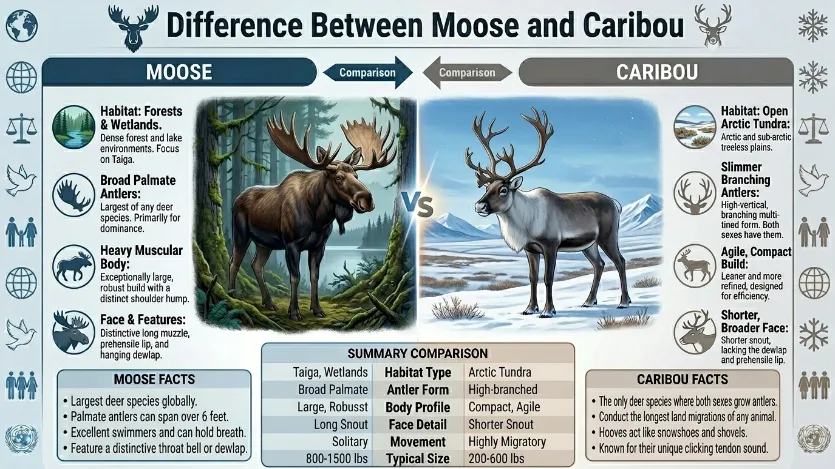
The main difference is that moose are larger and solitary animals, while caribou are smaller and live in herds.
Why Is Their Difference Necessary to Know?
Knowing this difference is important for students, wildlife experts, and travelers. It helps in wildlife conservation, safe animal interaction, and ecological understanding. These animals play important roles in maintaining environmental balance.
Pronunciation
- Moose
- US: /muːs/
- UK: /muːs/
- Caribou
- US: /ˈker.ɪ.buː/
- UK: /ˈkær.ɪ.buː/
Now, let’s explore their differences in detail.
Difference Between Moose and Caribou
1. Size
- Moose: Very large and heavy.
- Example: Can weigh over 600 kg.
- Example: Taller than a human.
- Caribou: Smaller and lighter.
- Example: Weigh around 150–300 kg.
- Example: Shorter in height.
2. Body Shape
- Moose: Long legs and bulky body.
- Example: Long face.
- Example: Large shoulders.
- Caribou: Compact and balanced body.
- Example: Shorter legs.
- Example: Streamlined shape.
3. Antlers
- Moose: Broad and flat antlers.
- Example: Shovel-shaped.
- Example: Wide spread.
- Caribou: Thin and branched antlers.
- Example: Complex structure.
- Example: Both genders have antlers.
4. Habitat
- Moose: Forests and wetlands.
- Example: Near lakes.
- Example: Dense woods.
- Caribou: Tundra and open areas.
- Example: Arctic plains.
- Example: Snowy landscapes.
5. Social Behavior
- Moose: Mostly solitary.
- Example: Lives alone.
- Example: Rare group interaction.
- Caribou: Highly social.
- Example: Large herds.
- Example: Group migration.
6. Diet
- Moose: Leaves, bark, and aquatic plants.
- Example: Tree branches.
- Example: Water plants.
- Caribou: Lichens and grasses.
- Example: Moss in winter.
- Example: Grass in summer.
7. Migration
- Moose: Do not migrate long distances.
- Example: Stay in one region.
- Example: Seasonal movement only.
- Caribou: Long-distance migration.
- Example: Travel hundreds of miles.
- Example: Seasonal migration patterns.
8. Speed
- Moose: Fast but less agile.
- Example: Short bursts.
- Example: Strong swimmers.
- Caribou: Very fast and agile.
- Example: Quick runners.
- Example: Escape predators easily.
9. Climate Adaptation
- Moose: Adapted to cold forests.
- Example: Thick fur.
- Example: Water tolerance.
- Caribou: Adapted to extreme cold.
- Example: Specialized hooves.
- Example: Thick insulation.
10. Human Interaction
- Moose: Can be dangerous if provoked.
- Example: Charge humans.
- Example: Defensive behavior.
- Caribou: Less aggressive.
- Example: Avoid humans.
- Example: Calm in groups.
Nature and Behaviour
- Moose: Independent, territorial, and powerful animals that prefer isolation.
- Caribou: Social, cooperative, and migratory animals that thrive in groups.
Why People Are Confused
People often confuse them because both have antlers and belong to the deer family. Their similar appearance at a distance adds to the confusion.
Table: Difference and Similarity
| Feature | Moose | Caribou | Similarity |
| Size | Very large | Medium | Deer family |
| Behavior | Solitary | Social | Herbivores |
| Habitat | Forests | Tundra | Cold regions |
| Antlers | Broad | Branched | Shed yearly |
| Movement | Limited | Migratory | Seasonal changes |
Which Is Better in What Situation?
Moose are better suited for dense forest environments where solitude and strength are advantages. Their ability to survive independently makes them well-adapted to areas with limited resources.
Caribou are better suited for open and harsh environments where group survival and migration are necessary. Their herd behavior and adaptability help them survive extreme climates and predators.
Metaphors and Similes
- Moose: “Strong like a silent giant in the forest.”
- Caribou: “Moving like a flowing river across the tundra.”
Connotative Meanings
- Moose: Neutral to positive (strength, independence)
- Example: “He stood like a moose—strong and calm.”
- Caribou: Positive (community, movement)
- Example: “They worked together like a herd of caribou.”
Idioms or Proverbs
- “Strong as a moose” (informal expression)
- Example: He is as strong as a moose.
- “Follow the herd” (related to caribou behavior)
- Example: Don’t just follow the herd blindly.
Works in Literature
- Hatchet (Adventure, Gary Paulsen, 1987) – includes moose encounters
- Caribou Song (Children’s literature, Tomson Highway, 2001)
Movies Related to the Theme
- Brother Bear (2003, USA)
- The Grey (2011, USA)
FAQs
1. What is the main difference between moose and caribou?
Moose are larger and solitary, while caribou are smaller and live in herds.
2. Do both have antlers?
Yes, but in caribou both males and females have antlers.
3. Where are they found?
Moose live in forests, while caribou live in tundra regions.
4. Which is more dangerous?
Moose can be more aggressive if threatened.
5. Do they migrate?
Caribou migrate long distances; moose do not.
How Both Are Useful for Surroundings
Both animals play vital roles in ecosystems by maintaining vegetation balance and supporting predator species. They are also important for cultural and ecological studies.
Final Words
Moose and caribou are unique and fascinating animals. Their differences highlight the beauty and diversity of wildlife.
Conclusion
In conclusion, the difference between moose and caribou lies in their size, habitat, behavior, and lifestyle. Moose are large, solitary animals of the forest, while caribou are social and migratory animals of the tundra. Understanding these differences helps in wildlife education, conservation, and appreciation of nature. Both species contribute significantly to ecological balance and symbolize the richness of the natural world. By learning about them, we gain a deeper respect for biodiversity and environmental harmony.

I am a professional SEO content writer specialising in comparison-based and grammar-focused articles. Through my website GrammarCompare.com, I help readers clearly understand the difference between confusing terms with well-researched, easy-to-read content. My expertise lies in focusing on clarity, accuracy, and practical explanations that improve both knowledge and writing skills.