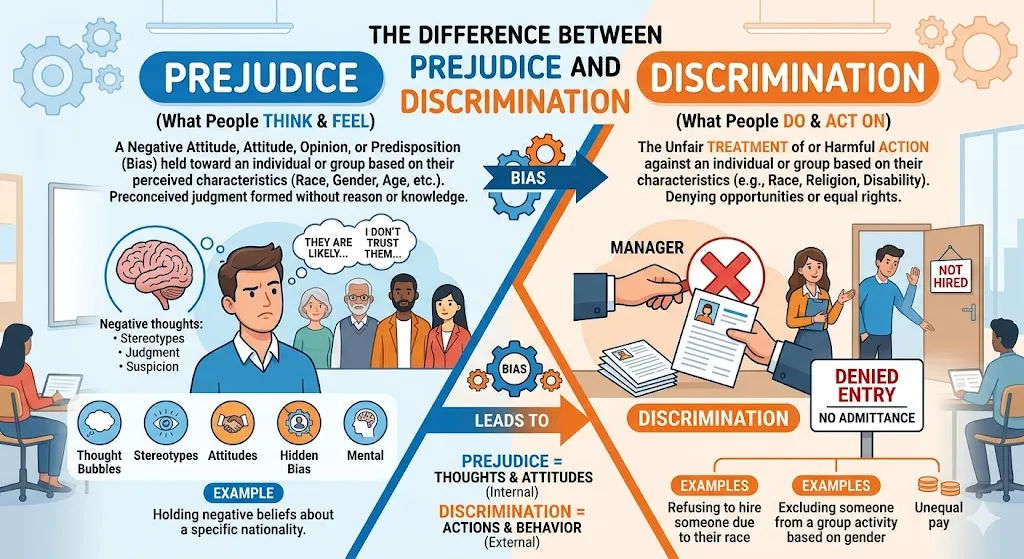
Imagine a qualified candidate being rejected for a job simply because of their background. Before the decision was made, someone had already formed an opinion about them without knowing their abilities. This situation reflects two important concepts: prejudice and discrimination. Prejudice is a preconceived belief or attitude, while discrimination is the action taken based on that belief.
Understanding the difference between discrimination and prejudice is essential in today’s diverse world. The difference between discrimination and prejudice helps us recognize harmful thoughts versus harmful actions. Many people confuse the difference between discrimination and prejudice, thinking they are the same, but they operate at different levels. Learning the difference between discrimination and prejudice allows individuals and professionals to promote fairness, equality, and respect in society.
Key Difference Between the Both
The key difference is that prejudice is a belief or attitude, while discrimination is an action or behavior based on that belief.
Why Is Their Difference Important for Learners and Experts?
Knowing the difference between discrimination and prejudice is important because it helps people identify bias at both mental and social levels. Learners can develop critical thinking and empathy, while experts can design policies to prevent injustice. This understanding supports equality, reduces conflict, and promotes inclusive environments in workplaces, schools, and communities.
Pronunciation (US & UK)
- Discrimination
- US: /dɪˌskrɪməˈneɪʃən/
- UK: /dɪˌskrɪmɪˈneɪʃən/
- Prejudice
- US: /ˈprɛdʒədɪs/
- UK: /ˈprɛdʒʊdɪs/
With this foundation, let’s dive deeper into the detailed differences.
Difference Between Discrimination and Prejudice
1. Definition
Prejudice is a mental attitude; discrimination is a physical action.
- Example 1: Thinking a group is inferior is prejudice.
- Example 2: Refusing to hire someone is discrimination.
2. Nature
Prejudice is internal; discrimination is external.
- Example 1: Feeling dislike silently is prejudice.
- Example 2: Excluding someone publicly is discrimination.
3. Visibility
Prejudice is often hidden; discrimination is visible.
- Example 1: Biased thoughts are unseen.
- Example 2: Unequal treatment can be observed.
4. Legal Aspect
Prejudice is not always punishable; discrimination can be illegal.
- Example 1: Personal bias is not a crime.
- Example 2: Workplace discrimination can lead to lawsuits.
5. Formation
Prejudice develops from beliefs; discrimination results from decisions.
- Example 1: Stereotypes create prejudice.
- Example 2: Policies may cause discrimination.
6. Control
Prejudice can be unconscious; discrimination is usually deliberate.
- Example 1: Implicit bias is prejudice.
- Example 2: Denying service intentionally is discrimination.
7. Impact
Prejudice affects thinking; discrimination affects lives directly.
- Example 1: Bias influences opinions.
- Example 2: Discrimination limits opportunities.
8. Social Effect
Prejudice spreads ideas; discrimination creates inequality.
- Example 1: Negative stereotypes circulate.
- Example 2: Unequal access to jobs occurs.
9. Changeability
Prejudice can be changed through awareness; discrimination requires policy change.
- Example 1: Education reduces bias.
- Example 2: Laws reduce discrimination.
10. Examples in Society
Prejudice exists in thoughts; discrimination exists in systems.
- Example 1: Assuming traits about a race is prejudice.
- Example 2: Segregation is discrimination.
Nature and Behaviour
Prejudice is emotional and cognitive. It often comes from fear, ignorance, or upbringing. It may not always lead to action but shapes attitudes.
Discrimination is behavioral and practical. It reflects decisions and actions that treat people unfairly. It often results from prejudice but can also come from institutional rules.
Why Are People Confused About Their Use?
People confuse these terms because they are closely related. Prejudice often leads to discrimination, so they appear interchangeable. Media and casual conversations also use them loosely, increasing misunderstanding.
Difference and Similarity Table
| Aspect | Prejudice | Discrimination | Similarity |
| Meaning | Belief or attitude | Action or behavior | Both involve bias |
| Nature | Internal | External | Affect society |
| Visibility | Hidden | Visible | Can harm individuals |
| Legal Status | Not always illegal | Often illegal | Linked to inequality |
| Impact | Affects thinking | Affects opportunities | Social consequences |
Which Is Better in What Situation?
Prejudice is never truly “better,” but understanding it can help individuals reflect on their own thoughts. In some cases, recognizing prejudice allows people to correct their biases before they turn into harmful actions. Awareness of prejudice can lead to personal growth and improved relationships.
Discrimination is not acceptable in any situation because it directly harms others. However, identifying discrimination is important in legal and social contexts. Addressing discrimination helps create fair systems, protect rights, and ensure equal opportunities for all individuals.
Metaphors and Similes
- Prejudice is like a “cloud over the mind,” blocking clear thinking.
- Discrimination is like a “wall,” stopping people from moving forward.
Connotative Meanings
- Prejudice: Negative (bias, unfair judgment)
- Example: His prejudice affected his decisions.
- Discrimination: Strongly negative (injustice, inequality)
- Example: The law protects against discrimination.
Idioms and Proverbs
- “Don’t judge a book by its cover”
- Example: Avoid prejudice by knowing people first.
- “Actions speak louder than words”
- Example: Discrimination shows true intentions.
Works in Literature
- “Pride and Prejudice” – Jane Austen (Romance, 1813)
- “To Kill a Mockingbird” – Harper Lee (Fiction, 1960)
Movies
- “To Kill a Mockingbird” (1962, USA)
- “Crash” (2004, USA)
- “Green Book” (2018, USA)
FAQs
1. Is prejudice always harmful?
Yes, because it leads to unfair judgments.
2. Can discrimination exist without prejudice?
Yes, through unfair systems or rules.
3. Which comes first?
Usually prejudice comes before discrimination.
4. Can prejudice be changed?
Yes, through education and awareness.
5. Why is discrimination illegal?
Because it violates human rights.
How Both Are Useful for Surroundings
Understanding these concepts helps build fair societies. Recognizing prejudice improves self-awareness, while identifying discrimination helps enforce justice and equality in communities.
Final Words
Prejudice and discrimination are closely linked but not identical. Understanding their differences helps promote fairness, empathy, and social harmony.
Conclusion
The difference between discrimination and prejudice lies in thought versus action. While prejudice exists in the mind, discrimination appears in behavior and systems. Recognizing this distinction is crucial for building a just society. By addressing prejudice, we can prevent discrimination and create inclusive environments. Whether in education, workplaces, or daily life, understanding these concepts empowers individuals to challenge bias and promote equality. Ultimately, awareness is the first step toward meaningful change.

I am a professional SEO content writer specialising in comparison-based and grammar-focused articles. Through my website GrammarCompare.com, I help readers clearly understand the difference between confusing terms with well-researched, easy-to-read content. My expertise lies in focusing on clarity, accuracy, and practical explanations that improve both knowledge and writing skills.